

Stay Connected with Grow Your WHY
Recent Posts
Archives
Planning Passion


Guest Post by Tamara Letter, ITRT, Mechanicsville Elementary School, Mechanicsville, VA
Tamara posted this blog originally on her blog Tiny Tech Tidbits about passion on April 19, 2017 and is cross-posting it here to share with Rethinking Learners readers. http:bit.ly/planningpassion
This week is our first week back after Spring Break and our fourth graders were ready to dive into creating their Passion Project display boards! After a brief introduction and a display of another class’s book projects, we were ready to begin!
I’ll be honest with you – it was a little bit of mayhem
trying to figure out the best way to proceed.
Passion Project Display Boards
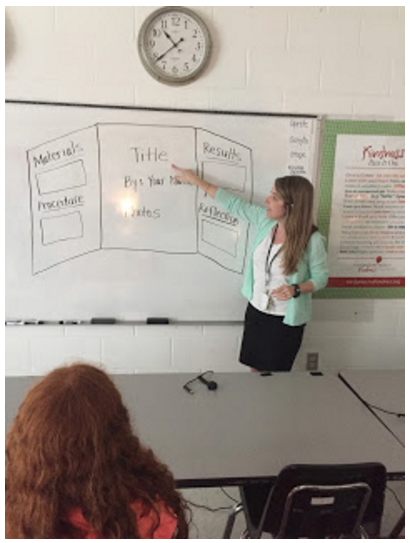
We showed the students a blank display board and talked about the required elements. While this wasn’t a science project, we still wanted to align the project display as close to the scientific method as possible to give our students a taste of the structure and organization they would discover in future projects.
Reflecting in Kindness Journals
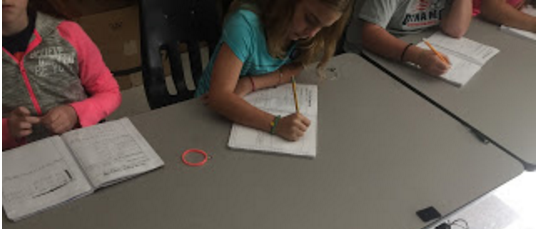
Students then took some time to complete the planning pages in their Kindness Journals. Since students completed their acts of kindness before break, we needed to fill in the sections for results and reflection.
We discussed the best way to tackle the display: What looked best on the models we had seen? What grabbed our attention and made us want to read more? We agreed that our white display boards were boring and would need color and large text. This naturally led into the decision-making process for a crucial question for our display board design:
Do we write everything out by hand or use digital tools instead?
Jumping into Google Classroom
This is only the second year our school district has used G-Suite tools (e.g. Google Docs) and it’s the first year we’ve jumped into Google Classroom. The learning curve for digital writing was a bit cumbersome at first with students having to create new passwords for the first use of accounts, then remembering those complexities as they maneuvered through logging on to the computer, accessing ClassLink, then accessing Google Classroom. Then we had to actually compose writing digitally.
There was a moment when I wondered if students might choose the traditional tools of markers and colored pencils, but unanimously the class agreed that digital text was best. Within minutes, students had laptops out, were logging in and we were scrambling to catch up!
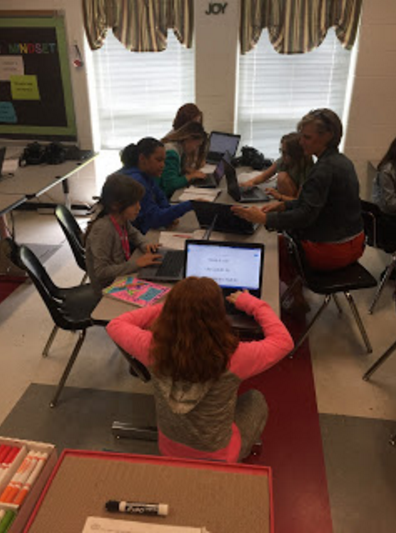 To keep the students organized, and allow us access to everyone’s work, we created individual assignments for each of the display headings: Title (which included presenter name), Materials, Procedure, Results, and Reflection. From there, students selected the assignment, created a new Google Doc and voila! Their digital paper was ready for typing.
We brainstormed project titles and helped our classmates with creative suggestions. We played with perfect pentameters as alliteration shined through our work. We discussed the differences between bullet lists and numbered lists and figured out how to switch between the two.
Even though Mrs. Cross and I had mapped out this entire year-long unit, some basic elements were left for student discovery and discussion. For example, one student asked, “Shouldn’t we have all the headings the same font and size?” Another student asked if they could add more fonts to their selection box, noticing the “More Fonts” option at the bottom of the font pop-up box.
The room was noisy and busy with students asking questions, helping neighbors, and requesting to be checked. When students determined that their section was complete, they raised their hand and we put a check mark beside that section on their planning page once it had been reviewed and edited.
We quickly realized that the original 45 minutes we had planned for today’s lesson was simply not enough time, so we extended our planning and preparation for another hour.
Today’s Lesson was Important; Engagement and Productivity was Priority
Thankfully, I had planned for success! Prior to the lesson, I put student names on gallon-sized Ziploc bags to hold any display items students would create for their projects. This was a lifesaver as many students were printing their pages, ready to customize them for their boards!
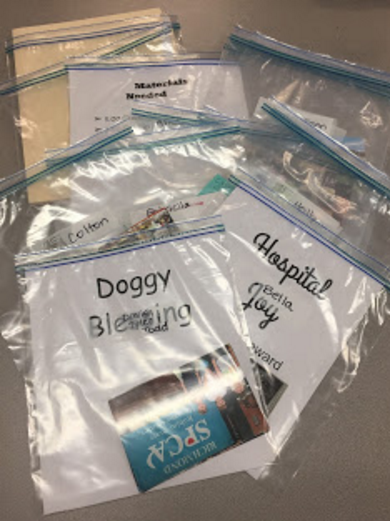
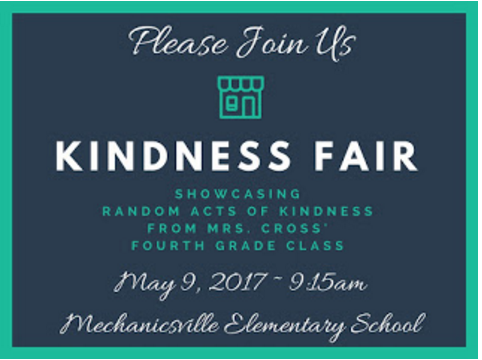
Next week we will wrap up our digital writing and customize our boards with color, photos and any additional ways we choose. That will leave us one lesson for a dress rehearsal and then it will be showtime: our Kindness Fair is almost here! We can’t wait to share with you all the ways we have blessed others with kindness through our Passion Projects!
•••••
 Tamara Letter is a passionate educator with more than twenty years’ experience, leading and learning as an elementary classroom teacher, Differentiation Specialist, and technology integrator. She also serves as the Social Media chair for the Virginia Society for Technology in Education conference and shares her expertise with others through professional development sessions, conference presentations, blogging, webinars and Twitter chats. She enjoys being a mom of three while sprinkling kindness like confetti to all she meets.
Connect with Tamara on her website: www.tamaraletter.com and on Twitter @HCPSTinyTech.
A few Publications by Tamara
“Bring Joy to the Classroom With Passion Projects” Teachers of Vision Magazine, Spring 2017 Christian Educators Association International
“Episode 6 – Bringing It All Together: Making It REAL: Relevant, Engaging, Aligned Learning” Performance Matters: Salon Series Educator Viewpoints on Personalized Professional Development
“When Ordinary is Extraordinary” SmartBrief Education: Editor’s Choice Content Award Winner
*****
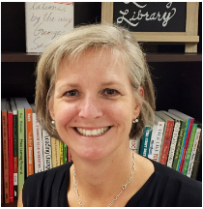 Lori Cross is completing her 25th year teaching. She has taught 3rd, 4th, 5th, and 8th grade. She currently teaches 4th grade at Mechanicsville Elementary School in Hanover County, Virginia. She is active in her community and enjoys getting her students involved in activities including serving the homeless and selling pumpkins at her church. She was thrilled to collaborate with Tamara Letter in this Kindness Passion Project initiative.
*****
Interested in checking out more of the Rethinking Learning podcasts and reflections, click on the podcast tab at the top, the logo below, or go to https://barbarabray.net/podcasts/
About the author
