

Stay Connected with Grow Your WHY
Recent Posts
Archives
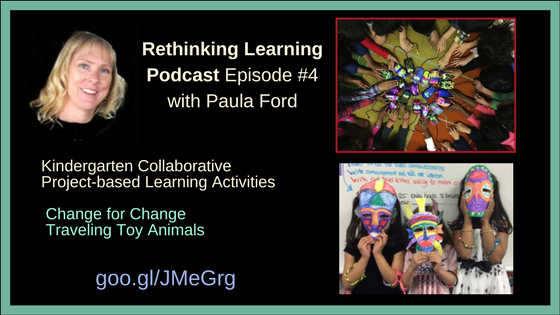
Episode #4: Conversations about PBL with Paula Ford


Podcast: Play in new window | Download
Subscribe: Spotify | TuneIn | RSS
Conversation with Paula Ford, Kindergarten teacher in Cupertino School District, San Jose, California, who facilitates collaborative global projects with her kids. Paula shares with Barbara that most of her career has been working with low-socioeconomic English language learners and why she loves it.
Could you tell me a little about yourself, your school, and your kindergartners?
I graduated from the University of California at Davis with my Bilingual Cross-Cultural Language and Academic (BCLAD) multiple subject teaching credential, and have been teaching for over twenty years. I began my career in bilingual education and then moved to teach second language learners.
I taught kindergarten, first grade, third grade, and have been a resource teacher for grades transitional kindergarten through fifth grade. The majority of my career has been teaching low-socioeconomic English language learners. Currently, I am teaching kindergarten at Manuel De Vargas Elementary School. Manuel De Vargas Elementary @DeVargas is a Title I school in the Cupertino Union School District in California. We have over 29 languages spoken at our school. Our school is in year 2 of transitioning to a STEM Project-Based Learning School, and I absolutely love it.
I’m excited to learn more about the Project-Based Learning activities in Kindergarten.
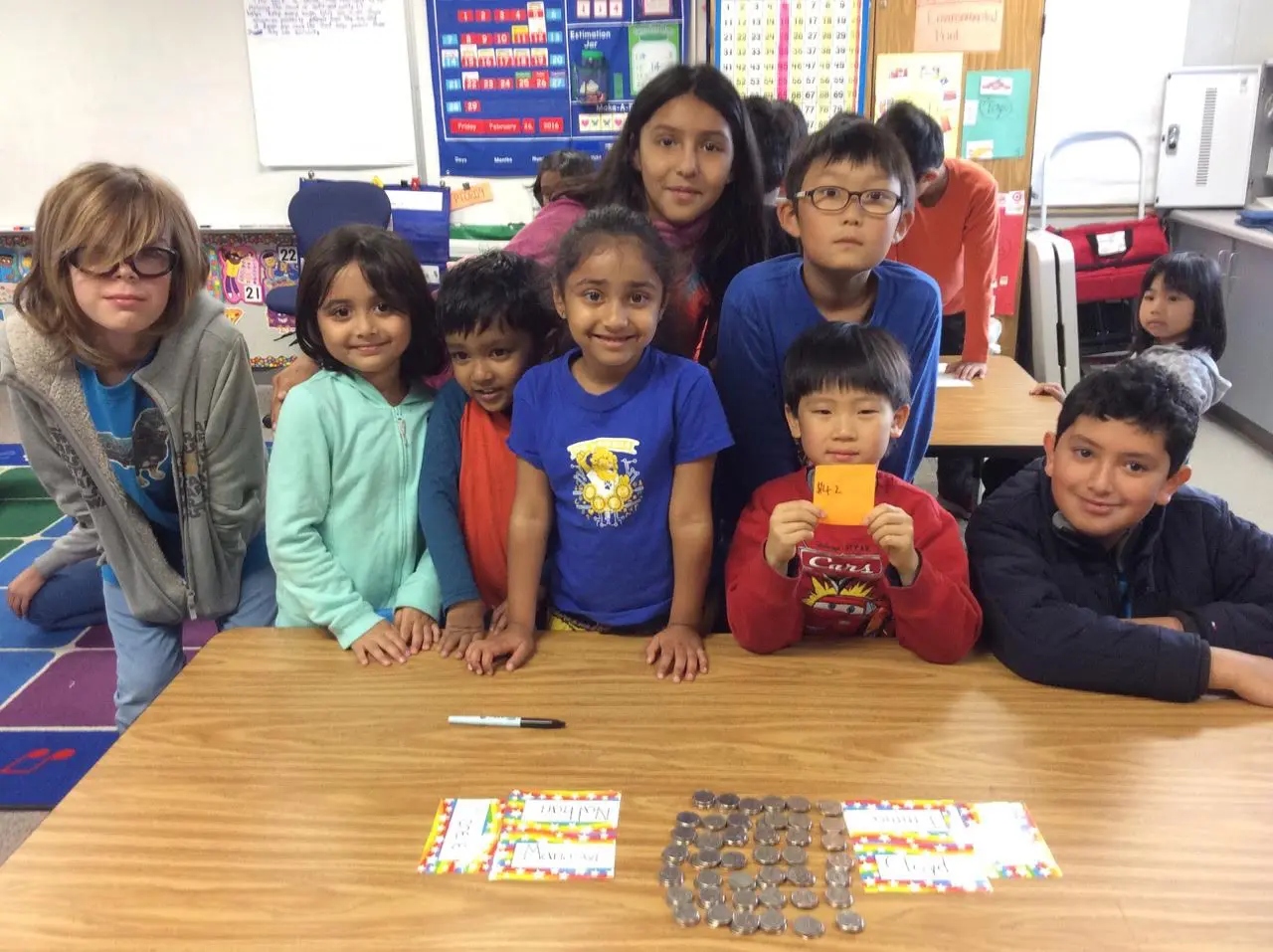 I wrote a post for this blog in March 2016 about a Kindergarten PBL my kindergarten kids undertook with a school in Africa with their 4th-grade buddies. The post is called Project-Based Learning Gives Kindergarteners Agency. I’m happy that Barbara has provided a space for me to tell the stories from my classroom, collaborating with others. This blog has pictures and tells about the journey my kinder kids went on as they collaborated with a school in Kenya. The kids designed the project called “Change for Change,” where they made African-inspired crafts to sell at a “pop-up store” on campus to donate the money to the African school, and did four video presentations to ask each class to donate coins for this school. They collected $470 to send to the school in Africa.
Project-Based Learning gives Kindergarteners Agency.
I wrote two other blog posts on Barbara’s site about our school’s work with the Buck Institute for Education (BIE) and need to add that our school serves children who speak over 29 different languages. I always find that fact amazing and inspiring. For those who are thinking about PBL or just starting it, it is like swimming for the first time. You have no idea if you will sink or swim until you try it. Letting your kids take charge of their learning is a huge risk, but the rewards are tremendous. The excitement is contagious. I am as excited about the learning as they are! So the next projects were about comparing cities and farms.
The driving question was “How are the city and the farm the same and different?”
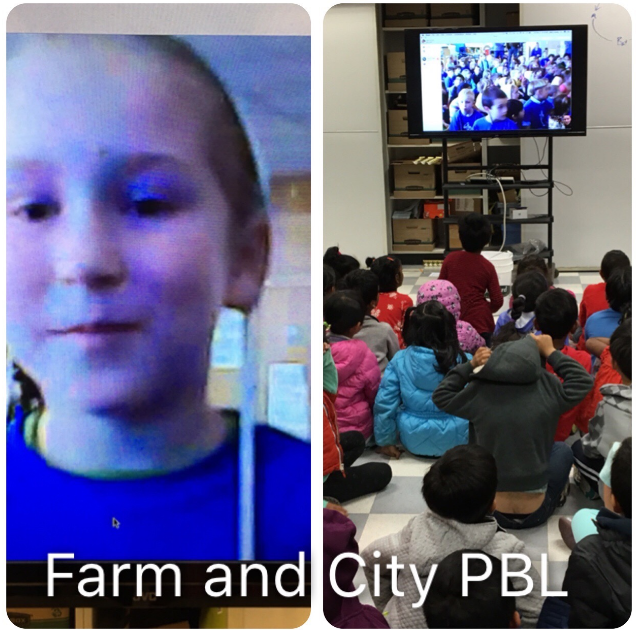 We read the book, Town Mouse Country Mouse to frame the reference of the project. Since my kids only knew about their city, they wanted to learn about life on a farm. So we collaborated with a kindergarten class in rural Indiana. Both classes sent video introductions that I included on the blog along with letters and toy animals each of the kids made.
We made toy mice by decorating computer mice to look like real mice. The kids in Indiana make a handmade toy house for each of my children. I wrote the journey in two blogs because some so many exciting events and stories came out of this PBL. I included pictures and videos, so I hope your readers enjoy them.
Traveling Toy Animals Part One
Traveling Toy Animals Part Two
Why is it important for Kindergarteners to learn to collaborate?
Collaboration is a necessary skill that our young learners need to have. If you look at our workforce, they are working in teams and video conferencing around the world. They don’t need to learn how to only learn something by themselves but to learn together in a group. They need to be able to understand and explain their thinking and understand another person’s point of view so they can work together. Why not learn these skills early in kindergarten?
What are some other ideas for projects you plan to do?
I am very lucky that my district is so supportive and my principal encourages us to do PBL and to develop collaborative projects. For the last three years, we have been fortunate to work with the Buck Institute of Education (BIE) on PBL. Actually, when you first start learning project-based learning, it makes your head hurt. It seemed like it was not possible, but BIE walked us gradually through the process. It is great to have the support we need from the top all the way through to the classrooms.
We plan to start next year with a school-wide PBL to get our whole school on the same page using the same driving question based on our mascot, a Lion. Each class will tackle the question differently based on the age range to develop a community. We haven’t come up with the final question, but it is something like this: “How can you show ROAR?” ROAR stands for Respect Others and Act Responsibly.
So my kindergarteners are going to explore each of the words on the acronym and what they mean in a 5-year-old world. Each class may address these words in a different way so a 5th-grade class will look completely different than my kindergarteners.
Share anything else about your passion for teaching and learning.
My passion is teaching the PBL way. I’m so lucky to have a job I love and am excited about going to work every Monday morning, seeing the enthusiasm from many of the kids. I love putting the learning in their laps because you never know quite where it’s going to go. When my kids are exploring, creating, and just having a blast, they aren’t even aware that all of the standards are tied to the projects. They are learning while experiencing and doing it. It’s a fun way to get a lot accomplished, and it’s fun for me too.
Make sure you follow Paula on Twitter: @prford5
*****
About the author
