

Stay Connected with Grow Your WHY
Recent Posts

Archives
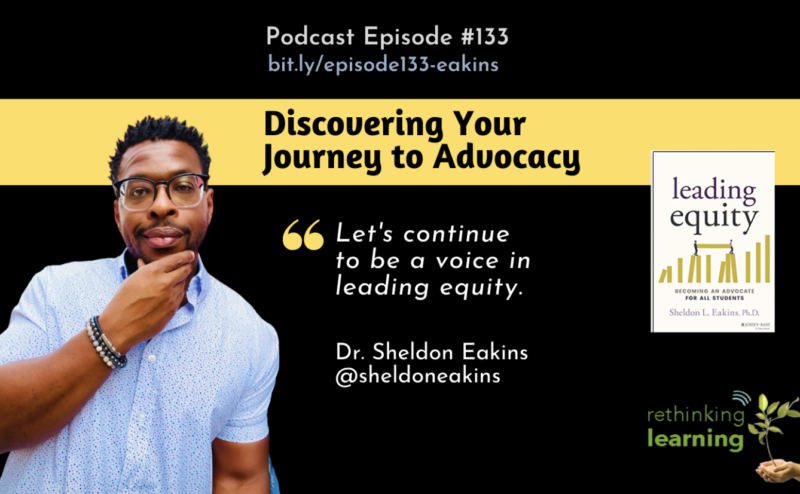
Episode #133: Discovering Your Journey to Advocacy with Dr. Sheldon Eakins


Podcast: Play in new window | Download
Subscribe: Spotify | TuneIn | RSS
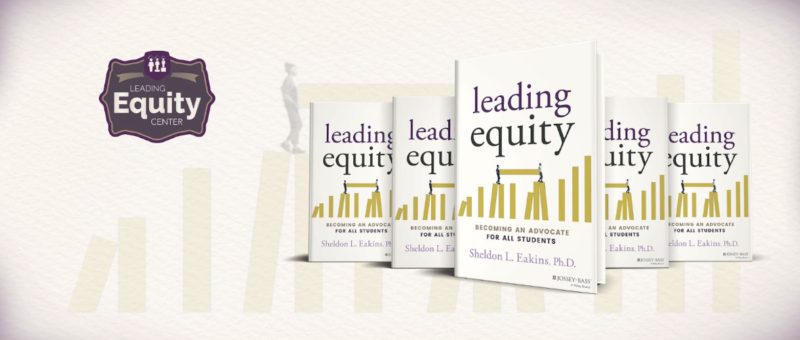
Dr. Sheldon Eakins. is the Founder of the Leading Equity Center and host of the Leading Equity Podcast. He is also the author of Leading Equity: Becoming an Advocate for All Students. With over 11 years in education, he has served as a teacher, principal, and Director of Special Education. Dr. Eakins has a passion for helping educators accomplish equitable practices in their schools.
Sheldon shared his story with me about his passion for helping educators accomplish equitable practices in their schools. Listen and enjoy the podcast and make sure you read the post below that Sheldon added about his journey.
*****
My Why
Never in a million years did I think I would end up in Idaho. And not Boise, Idaho. Everybody’s heard of Boise, but I live in a small college town in Southeast Idaho. As a black man, the idea of moving to a place with a 0.8% African American population in the entire state is a heavy decision to make. So you might ask, what made you end up here and what brought you to do this work?
At the time, I was looking for work. I just finished my doctorate and was looking for higher education positions. Initially, I didn’t have any guidance or knowledge of what you do after receiving your doctorate.
Higher education was the path that I thought I was supposed to take.
I remember my dad telling me, “Hey, there is this job here at Idaho State University that’s perfect for you. You’ll work at the university and get the opportunity to work with high school students as well.” But in the back of my mind, I thought there was no way I could move to Idaho. However, I put my application in just like I put in applications across the country, and guess who was the first to offer me a position? Idaho State University.
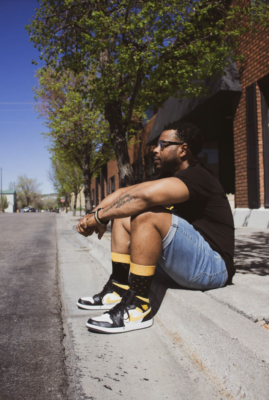 I moved to the state of Idaho not having much knowledge regarding diversity, equity, and inclusion terminology. As a black man, I was very familiar with a lot of experiences that I encountered, but I wasn’t always keen on the definition of those experiences.
About a year into living in Idaho and working with students and dealing with personal challenges, such as microaggressions and listening to the stories that my students were telling me, especially my students of color were telling me with regards to how they were treated, I wanted to help them, but I didn’t have strategies to assist my students.
I did not have those tools, strategies, or resources, and I figured I couldn’t be the only educator with this problem. So I decided that I wanted to create content so that I could learn how to be a better equity-minded educator and also be able to help other educators in the same process. Because ultimately, it’s going to impact our students.
The Birth of the Leading Equity Podcast
About four years ago, I started The Leading Equity Podcast with that goal in mind so that I could learn how to be better, how I can be an advocate, and how I can support my students and myself, living in a predominantly white area. Over the past four years, I have learned so much. I’ve had the opportunity to work with various schools, districts, higher education, non-profits, and for-profit organizations. The goal and mission were to provide the tools and resources necessary to ensure equity in any setting.
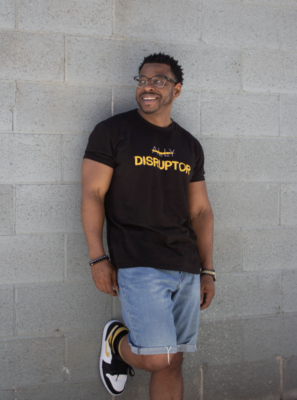 So you might ask, “what makes equity in education so special?” Here’s the thing. Equity-minded educators understand that education requires high expectations for all students. Additionally, equity ensures all students’ linguistic, cultural, and experiential backgrounds are systematically integrated into curriculum and instruction. Culture is an exciting concept that can be thought of as the different customs, arts, and achievements of various populations.
Leading Equity’s birth resulted from many of the cultural differences, the experiences I’ve had as an educator, as an individual who has worked in various communities, from Native American Reservations to urban Black schools, to predominantly white schools. Working as a teacher, as a Special Education Director, and as a principal, I’ve had these experiences.
I’ve recognized over the years that each student has their individuality, talents, and interest, and we can use those as assets. When we think about motivating our students and the engagement that we want in our classroom, we have to remember that one size fits all does not work.
This is why I do what I do because I know that if I don’t do it, who will?
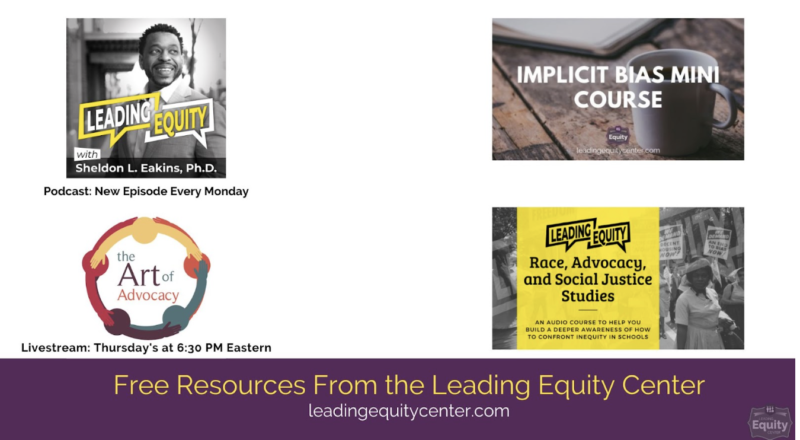
If you are wondering where you can get resources on becoming an equity-minded educator, you can find everything you need at the Leading Equity Center. You can also follow the Leading Equity Podcast and my weekly Livestream the Art of Advocacy on Facebook and YouTube.
*****
About the author
