

Stay Connected with Grow Your WHY
Recent Posts
Archives
Episode #127: Amplify the Voices of All Students with Hedreich Nichols


Podcast: Play in new window | Download
Subscribe: Spotify | TuneIn | RSS
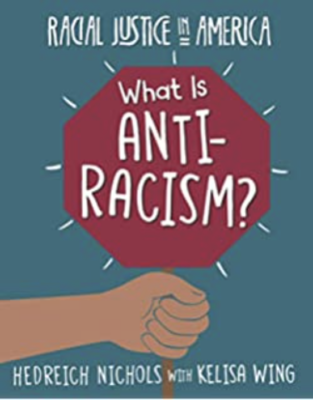
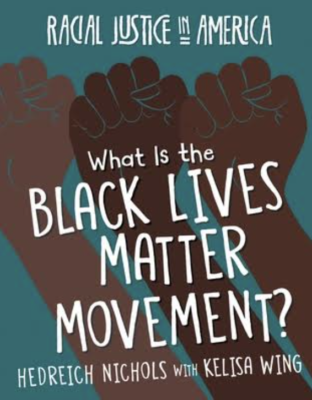
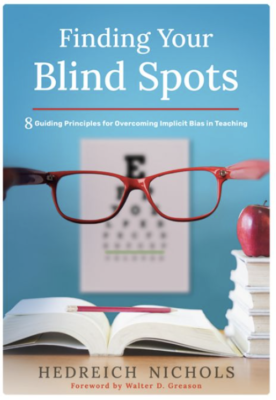
Hedreich Nichols is an author, educator, and consultant helping educators and districts amplify the voices of all students. Hedreich’s YouTube series and podcast, SmallBites, further help campuses amplify student voices by focusing on equity in education. Between SmallBites and her work as a writer, Hedreich works to help educators create more culturally responsive classrooms and campuses. Her Cherry Lake trade titles “What is Antiracism?” and “What is the Black Lives Matter Movement?” provides teachers with materials to help students understand systemic inequities; and her upcoming Solution Tree title, Finding Your Blindspots, provides educators with guiding principles to help them create more inclusive, welcoming campuses for all students.
As a speaker at conferences like VASCD, MASCD, CUE, etc. Hedreich provides educators with inspiration and a safe space to move beyond conversations around race; giving them hands-on, research-based strategies that can be immediately implemented.
When not working, Hedreich plays Mom to @SwissChrisOnBass, godmother to her friend’s fur baby, and vegges out on Instagram puppy videos. Hedreich received her Master of Education in educational technology at Texas A&M University.
*****
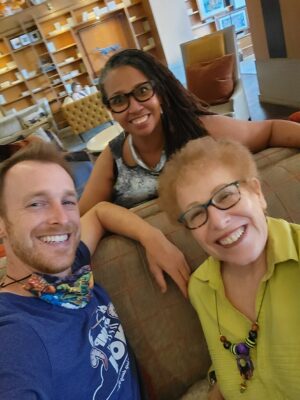
Hedreich met me and my son, Andrew, at the Deeper Learning Conference in Louisville, Kentucky in August 2021. We had a wonderful time learning and playing together. Hedreich did an amazing keynote on the first day. For this podcast, Hedreich added several stories about her life that I wanted to share with you here.
Your family growing up
I grew up in the house with my mom, grandmom, and great grandmom. Ours was a house full of laughter, music, and a lot of stories. My great-grandmom and mom especially told the stories of their youth, of coming of age in a time that seemed very different from mine. “Mommie” was born before the turn of the 20th century and the stories she told were from a time when lynchings were a regular occurrence. She herself was a landowner who operated a small store with her husband, “Boss” who had played in the Negro leagues before Black athletes could play major league sports. She also learned never to look White people in the eye and to “stay in her place” unless she wanted to see her husband lynched or her home burned to the ground. Louisiana was not a safe place for people who looked like us. The stories she told of people living in, being freed from, or escaping enslavement were told to her first hand. Those were stories I heard snatches of while pretending not to “mind grown folks’ business”.
My grandmother, a child of the great depression, managed to survive and even study nursing at Xavier University at a time when many Black people could not access K12 education, much less college. She didn’t like to talk much about her childhood or coming of age. But when she did her stories were almost always tinged with violence. A college roommate was killed on a date; an aunt was poisoned, a neighbor was found dead for loving the wrong person. Her stories were fewer, but her message of the dangers lying in wait for a Black girl was clear.
My mother came of age during the civil rights era and embraced afros and women’s independence at the dawning of their trendiness. Instead of stories, she taught me how to sing harmonies. By seven she’d taught me to play Scrabble, Whist, and Dominoes. She was not the Chutes and Ladders kind of mom. By 8 I was performing in musical theater and by 12, under her tutelage, I played piano and composed music. That year, she also gave me her collection of 45s featuring all the old Motown hits. Her stories were about sundown towns, and segregation coming to an end. She made sure that I was on the integration bus early on.
What it was like for you as a student
Passing up my neighborhood school to get me “a better education” at the White school, my mom made a decision that was not popular with her mother. There were definitely pros and cons to early integration.
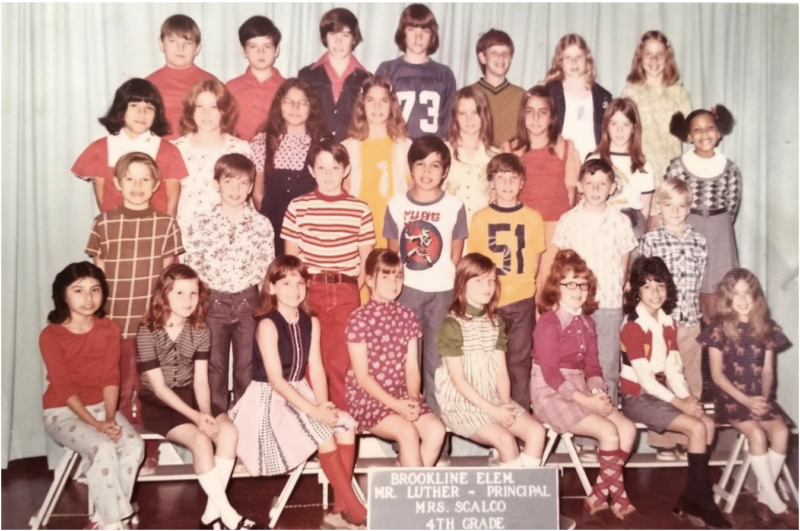
The school was better outfitted and resourced, however, the people there didn’t know me and often had never met a non-white person. I was either the exotic pet, a smart, musically talented Negro with cotton-like hair who was a credit to my race; or a person who didn’t belong. I only felt the disdain of my 1st and 6th-grade teachers, so the experience was largely a positive one. My music teacher and the school librarian were both Black women who allowed me to “see myself” in an overwhelmingly White space. They were the teachers I developed significant relationships with, or maybe, they were the teachers who developed significant relationships with me. They too were rare, and they were the bridge between the two very different worlds of school and home. Once I got to secondary school, other Black families were choosing integration so there were more of us in White schools and I began to experience the tug between two worlds on campus. But again, it was my normal. I am still learning the significance and context of many of those experiences today.
Moving to Switzerland – Hedreich’s music
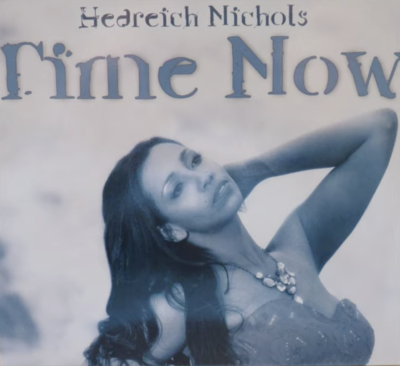
Starting at 8, I sang and “did” musical theater. This continued throughout adulthood when I got to perform in musicals like “Mama I Want to Sing” and with groups like the famed Jazz Crusaders under the artist name “Reichii”. Through touring I developed relationships with people in Switzerland and moved there to perform and teach. Conducting workshops on the Black music experience and teaching music, I was able to bridge not only Black and White
but also American and Swiss cultures. My son was the best ‘product’ of that time. He too showed early musical promise and when I divorced and we repatriated, he was blessed to have all the musical experiences that I did. He’s performed in plays and musicals and played upright bass in school and city youth orchestra starting at age 10. Notably, “@SwissChrisOnBass” is the 5th generation church musician, and the 3rd generation professional musician in the family who has been playing professionally here and abroad since he was 14.
****
Check out these links to Hedreich’s resources:
#SmallBites: YouTube series and podcast
Author, What is Anti-racism? and What is the Black Lives Matter Movement?
Author, Solution Tree book: Finding Your BlindSpots
Eight Guiding Principles for Overcoming Implicit Bias in Teaching
Hedreich’s Contact Information
Twitter: @hedreich
Instagram: @hedreichnichols
Facebook: Hedreich Nichols
LinkedIn: Hedreich Nichols
Anchor: Anchor.fm/hedreich
Check out the reflection we did about understanding systemic racism: Reflection #16: Where are you on your journey understanding racism?
*****
About the author
