

Stay Connected with Grow Your WHY
Recent Posts
Archives
12 Ways to Build Positive Relationships


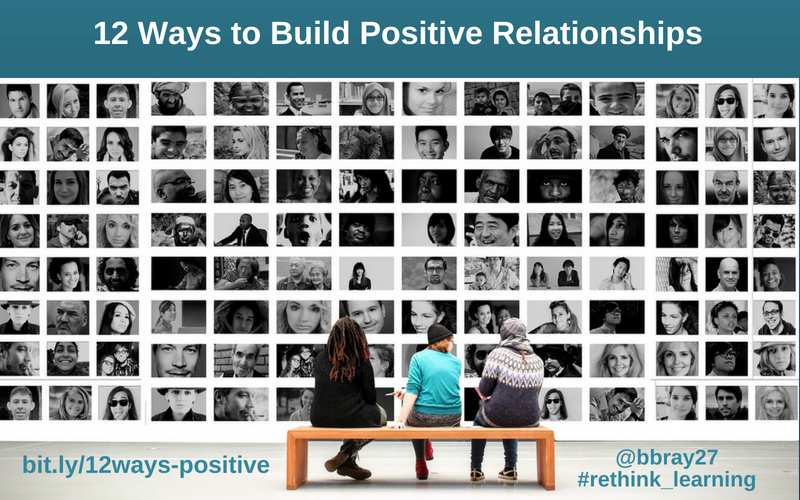
Humans are naturally social beings. It is all about the relationships we build and grow. The better the relationships are at school, the happier and more productive students and teachers will be. When we have positive relationships, everything we do will be more enjoyable. When relationships are working, everyone is happier, more innovative, and creative.
1. Create the Culture
Put aside at least two weeks at the beginning of school to build a caring, compassionate culture before jumping into academics. The more you get to know each child up front will save you time later worrying about discipline and behaviors.
2. Build Trust
Trust is the foundation of every good relationship. If you trust the people at school, you can be open and honest with your thoughts and actions. Put time aside to discuss issues and let everyone have opportunities to speak. If there is a conflict, give time and support for the people involved to resolve it.
3. Develop Mutual Respect
When you respect the people in your school, you value their input and ideas, and they value yours. Working together, you can develop solutions based on your collective insight, wisdom, and creativity.
4. Be Mindful
Mindfulness means taking responsibility for our words and actions. Those who are mindful are careful and attend to what they say, and they don’t let their own negative emotions impact the people around them.
5. Welcome Diversity
People with good relationships not only accept diverse people and opinions, but they welcome them. For instance, when your friends and colleagues offer different opinions from yours, you can take the time to consider what they have to say and factor their insights into your decision-making.
6. Schedule Time for Relationship Building
Relationships take time to develop and grow. Devote a portion of your day toward relationship building, even if it’s just 20 minutes, perhaps broken up into five-minute segments.
7. Appreciate Others
Show your appreciation whenever someone helps you. Everyone wants to feel that their work is appreciated. So, genuinely compliment the kids and other teachers when they do something well. This will open the door to positive relationships.
8. Be Positive
Positivity is attractive and contagious, and it will help strengthen your relationships with your colleagues. No one wants to be around someone who’s negative all the time. But we are human and things happen. When you have good relationships, you can also reach out to others when you are having a bad day. Read about Intentional Positivity
9. Practice Active Listening
People respond to those who truly listen to what they have to say. Focus on listening more than you talk, and you’ll quickly become known as someone who can be trusted. Read about Active Listening
10. Go Mobile with Care
Teach how to use mobile technology to build relationships effectively. Kids today are going to use their smartphones and other mobile devices to connect. We need to be there and show them how to thoughtfully connect and collaborate online
11. Be Kind
Kindness first. Everyone has other things happening in their lives. Practice empathy so you can understand what others might be going through. Be aware of the child who is alone or depressed, reach out, and listen. Kindness always.
12. Model Positive Relationships
Teachers can be role models for positive relationships. We need to be mindful, kind, and accepting of all the people in the school. All of our kids look to us for guidance. We need to reach out to those children that need the extra time to listen, really listen. We need to build relationships with the other teachers and administrators and be careful what we say even in the staff room.
***
Building positive relationships with students, teachers, and all school staff in school will spill over to the school community. Parents will feel more comfortable when their children are happier and feel cared for at school. Kids today need other kids and the world can be a scary place. We need to model kindness and be there for each other.
For all of the Rethinking Learning podcasts with Barbara Bray, click on the podcast tab at the top, the logo below, or go to https://barbarabray.net/podcasts/
About the author
