

Stay Connected with Grow Your WHY
Recent Posts
Archives
Inspire Wonderment Through Global Project-Based Learning


Guest Post by Linda Ullah @linda_ullah, Online Instructor, Krause Center for Innovation, Foothill College, Los Altos Hills, California
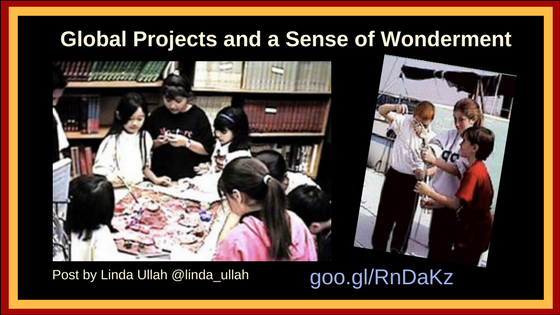
In 1970, Neil Postman and Charles Weingartner wrote an article in The School Review (Vol. 78, No. 3 (May, 1970), pp. 429-434) entitled “Teaching as a Subversive Activity.” They point out the best educational environments are ones that are open-ended and inspire wonderment through interesting activities. I started using the term “Teaching as a Subversive Activity” when No Child Left Behind was enacted. I just now learned where it came from. Forty-seven years later, in spite of legislation to the contrary, the best educational environments are still those that are open-ended and inspire wonderment through interesting activities that empower learners to develop agency.
My Experience to Wonder and Be Curious
Throughout my long career as an educator, I experienced several swings of the pendulum–several “reforms.” Teaching, for me, has been a long process of learning. I’ve been fortunate to work with outstanding educators who really care about their learners. It is that caring that is the key to empowering learners to wonder, to be curious, to be excited about learning.
 In the 1990s, while teaching at Edenvale School in the Oak Grove School District in San Jose, CA, my learners became interested in local history when the school was celebrating its 25th anniversary. Encouraged by my principal, Meril Smith, I wrote an Apple grant and got 8 networked computers, some software and a dial up AOL connection. The grant was based on our local history project which my learners entitled The Great Edenvale Detective Caper. This was my foray into project-based learning and into personalizing learning, although, at the time I was unaware of these pedagogies. I blundered my way into them instinctively because it seemed like the right thing to do. I still remember standing in the middle of my classroom watching every learner fully engaged in the project and not needing my help. The project morphed and continued over the next three years.
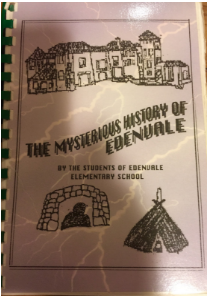 During that time my learners, and other learners at the school, wrote, self-published and sold a book entitled The Mysterious History of Edenvale, Proceeds from the book were donated to the Adopt-a College program to help provide college scholarships for former Edenvale learners. Edenvale learners also wrote and performed in a local history play named “Edenvale 95111”, created a school-wide, local history day with games and activities for each period of history, designed and painted a local history mural on campus, worked with East Los Streetcapers to help design a piece of street art near downtown San Jose, and created a local history museum on campus. The project took on a life of its own because the learners were in charge of it. On occasion, I still hear from my former learners wanting to know if I still have copies of the book that they might borrow or purchase. I’ve managed now to save just one copy for myself.
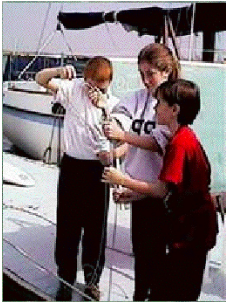 As Edenvale school became networked, more opportunities for my learners to work with others presented themselves. I joined some National Geographic Network science projects during which my learners worked with research scientists and learners from other schools around the U.S. and the world to do real scientific research on acid rain, recycling, water pollution. This led my learners to become more interested in pollution, and I was fortunate to be selected and trained in Global Project Based Learning in Qiryat Shemona, Israel along with teachers from several other countries. I was partnered with a high school in Sao Paulo, Brazil and my elementary school learners worked with high school learners on a cross-curricular project centered around water-pollution. My learners and I also participated in several Jason Project projects working with scientists and learners from around the world doing research on volcanoes, coral reefs, rainforests, etc. During this time I noticed that the more I allowed my learners to control what they wanted to learn about and how they wanted to learn it, the more excited and engaged they were.
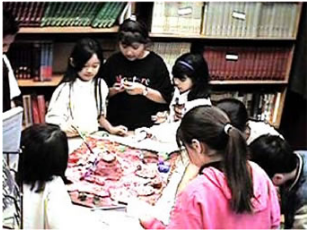 In 1995, I took a part time position as a technology learning coordinator in my district for the Challenge 2000 Multimedia Project–a federal technology challenge grant through Joint Venture Silicon Valley involving schools in Santa Clara and San Mateo Counties. I remained in the classroom part time. As a group of educators, the TLCs (technology learning coordinators) under the direction of Michael Simkins became a powerful professional learning community as we learned from each other about project based learning, collaboration, and coaching. My learners worked with learners at Frost Elementary School and the Live from Mars Project to create shoe factories (their choice) for a Mars Colony. The following year, my learners chose to create the Mars Virtual Olympics. The teachers I coached began to do collaborative projects with other classes and schools as well. My passion for connecting classrooms around the world began to grow.
Three Questions for Educators to Wonder
- How do we empower our learners through wonderment and interesting open-ended educational activities when standardized testing looms like a hungry tiger looking for prey?
- How do we assure that our learners are fully engaged critical thinkers who remain the motivated, joyful learners they were before they started school?
- How can we as educators assure that our learners have the skills they need to live and work in a global economy and in a world where technology connects us in both positive and negative ways?
Becoming Globally Literate to Understand Diverse Cultures
Globally literate people have an understanding of diversity, culture and language that allow them to live and work in peace with each other. We live in a culturally, racially, religiously and linguistically diverse world full of wonderful opportunities. Giving our learners the chance to work with learners who live in other cultures can only strengthen global understanding and hopefully promote world peace. In our global economy it is critical that our learners develop an inherent respect for the many cultures, races, religions and languages of the world.
The rationale behind global project-based learning is to give learners the opportunity to become aware of and appreciate each other’s cultures, languages, and religions so that they will develop positive working relationships around a common goal and develop an empathy for peoples from other parts of the world. Ultimately this multicultural understanding and empathy will promote a healthier environment, better living conditions for all, and worldwide peaceful relationships. Peace and prosperity in the 21st Century depend on increasing the capacity of people to think and work on a global and multicultural basis. As technology opens borders, educational and professional exchange opens minds. (Institute of International Education)
Real Learning Provides a Sense of Wonderment
The first question I get from teachers is: “…but I have standards to “cover” before the “tests”. This is followed by the statement: “ I have to assure my learners show …x… on the state tests.” Since I view teaching and learning in an era of “accountability” as a subversive activity, my reply is paying homage to standards and standardized test does not mean you have to sacrifice real learning. Real learning happens when learners are empowered, excited and engaged. It is that sense of wonderment that Postman and Weingartner discussed.
Begin by finding out what excites and interests your learners. Discover (perhaps with your learners) where those interests and the standards intersect. Think cross-curricular. If you are at the secondary level, look for a partner teacher who teaches a different content area. If this is new to you, look for global projects that meet your learners interests and the standards.
Global projects you can join:
- Global SchoolNet
- Global Collaborative Projects
- ePals
- iEarn
- The Global Classroom Project
- Launching a Virtual Book Club
- Kid Link
- Skype in the Classroom
- OneWorld Classrooms
- Online Projects for Kids
- The Jason Project
- Center for Integration in Engineering and Science Education Projects
- Flat Stanley
- Connect Your Class to the Outside World
- Projects by Jen (Links to an external site.)
- Global Collaboration Day Projects
Examples of virtual field trips:
- Google Expeditions
- 10 of the Best Virtual Field Trips
- Discovery Education–Virtual Field Trips
- Virtual Field Trips Web Site
- Skype in the Classroom-Virtual Field Trips
- Virtual Field Trips–Scholastic.com
- Virtual Field Trips for the Classroom
- This is What Google Expeditions Can Do in a Classroom
Find a friend or family member who is traveling and have them blog their trip for your classroom and/or take a Flat Stanley along with them. For example, in 2006 Flat Stanley went with me to Singapore and Bangladesh for a friend’s classroom.
Finally, look for a colleague or friend who teachings in another school, another state, another country and begin to plan a project that connects both of your classrooms. My eCoach is an excellent collaborative planning tool.
****
Former President Jimmy Carter once said, “We become not a melting pot but a beautiful mosaic. Different people, different beliefs, different yearnings, different hopes, different dreams.” One of the best gifts we can give our learners is to help them, through their interests, develop wonderment about the world and the people who live in it.
****
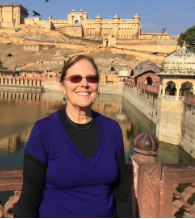 Linda Ullah has a M.Ed in Special Education and a M.A. in Instructional Technology. She is an online instructor for the Krause Center for Innovation at Foothill College. She has been an elementary classroom, special ed, Title 1 and GATE teacher, a technology learning coordinator, teacher in residence at the Krause Center for Innovation , a school development coach for the New Tech Network, a coach for the Friday Institute at NC State University, and a coach for Personalize Learning, LLC.
Follow Linda on Twitter: @Linda_Ullah
*****
Interested in checking out the Rethinking Learning podcasts and reflections, click on the podcast tab at the top, the logo below, or go to https://barbarabray.net/podcasts/
About the author
