

Stay Connected with Grow Your WHY
Recent Posts

Archives
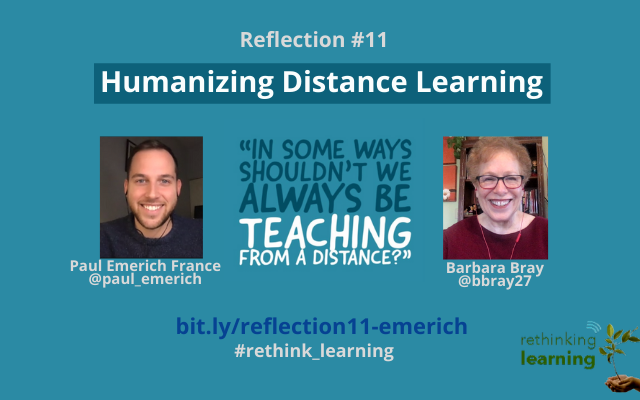
Reflection #11 on Humanizing Distance Learning with Paul Emerich France


Podcast: Play in new window | Download
Most of us have little choice now about incorporating digital pedagogy into our teaching. But that doesn’t mean we have to succumb to the dehumanizing effects of individualized or digitally driven education technology. We don’t have to force students to use web-based adaptive tools or make them simply watch videos of our teaching. There are ways to humanize digital pedagogy, in an effort to preserve our students’—and our own—sense of humanity while we’re all teaching and learning remotely. [Edutopia article: 3 Tips on Humanizing Digital Pedagogy]
What does Humanizing Distance Learning look like?
- incorporating student voice
- promoting student independence
- deindustrializing your curriculum
- centering identity
- intensifying SEL
- building classroom norms collaboratively
More here: https://buff.ly/34FZXSI
I’d like to discuss deindustrializing your curriculum first. This seems to be more about trying to change the system. How do we do that? Where do we start?
It is and it isn’t. We have to attack this from both ends, and unfortunately, teachers do not have the power to change the entire system on their own. But they can make small changes to their pedagogy that deindustrialize and personalize learning.
Why not use this unique moment of time to reconnect with the true purpose of teaching: to help our students become liberated learners and free thinkers?
Let’s talk a bit about EdTech Minimalism. How can teachers be EdTech Minimalists in an era where they are forced to use so much of it?
- Maximizing active screen time, as opposed to passive screen time
- Moving away from app-centric learning
- Minimizing quantitative data
- Centering human connection — always
What are some ways to intensify SEL (social-emotional learning) in a remote teaching environment? What tips do you have?
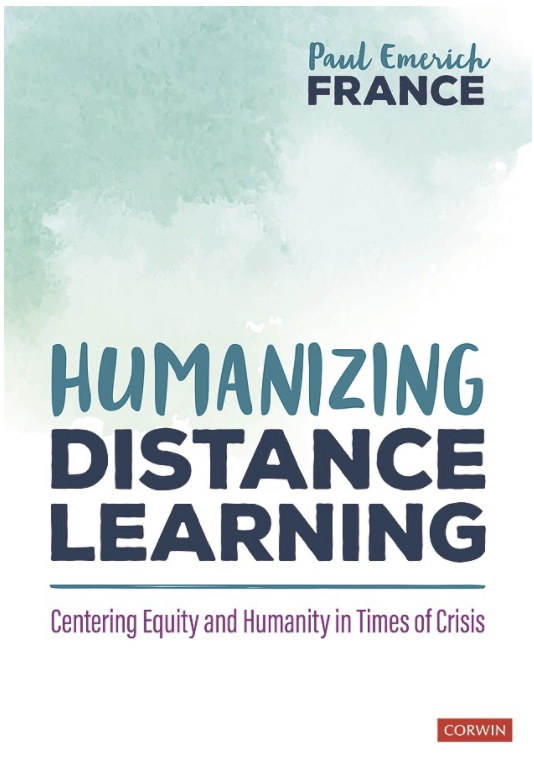
In my book, Humanizing Distance Learning, I talk about structure and continuity, building a sense of community, strategies for hope and gratitude, and building a resilient classroom culture with feelings check-ins, stretch breaks, and other ways to keep your classroom community tight. I think the biggest idea is de-centering academics. We have to get comfortable with the fact that we make no meaningful progress on academics without a strong foundation of social and emotional learning. Click on the image to access my book Humanizing Distance Learning: Centering Equity and Humanity in Times of Crisis.
eTextbook available on Amazon
Paperback available from Amazon on January 9, 2021
Paul’s Contact Information
Website: paul@paulemerich.com
Twitter @paul_emerich
Check out the podcast with Paul: Episode #78: Reclaiming Personalized Learning
More about Paul’s consulting services: https://paulemerich.com/consulting/
****
Interested in checking out more of the Grow Your WHY podcasts and reflections, click on the podcast tab at the top, the logo below, or go to https://barbarabray.net/podcasts/
About the author
