

Stay Connected with Grow Your WHY
Recent Posts
Archives
Reflection #10 on Humanized Pandemic Teaching with Chris McNutt


Podcast: Play in new window | Download
Enjoy Barbara Bray’s conversation with Chris McNutt, a 9th-grade digital design and media educator and Executive Director of the Human Restoration Project, on how to build a more human-centered classroom amidst a pandemic.
Classrooms today
Education has the power to shape a new world – one that cares for all, provides equitable outcomes of opportunity, and ensures everyone is appreciated and valued. In theory, our school system should exemplify the overarching goal of students driving forward a curriculum that centers on their values and promotes these outcomes of social justice. However, classrooms are not always a humane place.
COVID-19 has brought to light and doubled-down on the carceral practices of schools. Similar to the carceral practices brought forward by the police reform/Black Lives Matter/defund the police movement, our recent foray into “pandemic teaching” has highlighted the dehumanization of students in a place meant for learning:
- In an effort to maintain “accountability,” adolescents to young children are being assigned many hours of tedious work to replicate the school day at home.
- To prevent “cheating,” test software companies are employing Orwellian security measures to monitor and surveil students’ households.
- To ensure “no one falls behind,” schools have doubled down on faux “rigor” through grading even more.
It’s not that dehumanization started with the pandemic. For many students, coming to school is a negative experience. Earlier this year, a survey of 21,678 high school students found 75% reported school as a negative experience, signaling they were tired, stressed, and bored. The curriculum is disengaging, centered on a whitewashed narrative that doesn’t connect to students’ lives, the teacher controls (mentally and physically) much of what students can/will do, and the value of learning is centered on standardized testing. Now, as schools lockdown their classrooms in a (needed) effort to contain the pandemic, we find the doubling down of these practices.
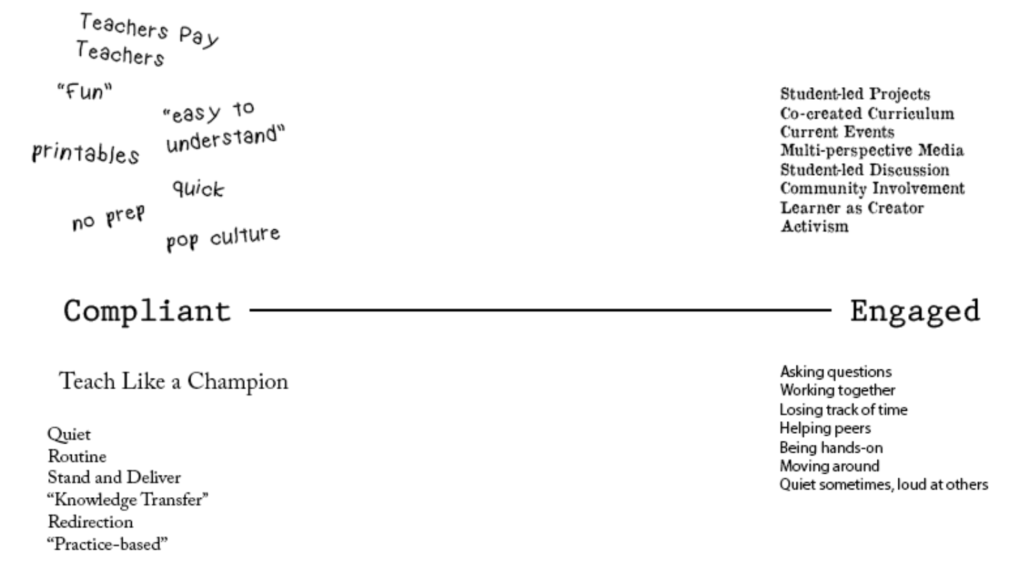
This isn’t to say that teachers are to blame. In a system where raising standardized test scores is the pinnacle of success, teachers are expected to use whatever means possible to uphold the status quo. Challenging that status quo is an extreme risk in many cases, and we cannot assume that teachers who default to any-means-necessary business-as-usual are bad people and/or teachers. Yet, when observing a modern pandemic classroom, it’s hard to not be disappointed with the state of affairs.
There is no one size fits all solution to pandemic teaching. The root of the issue isn’t COVID, it’s the systems in place that dehumanized education, to begin with. Why is it that we equate more work with more learning? Why do we not trust our students? Why are we believing that test scores equivocate to success? After all, when we prioritize these inhumane systems, we set up our youth for negative outcomes.
So, what can we do to counteract this? How can we build a more human-centered
classroom amidst a pandemic?
The first and most important shift is to simply ask students what they think. What do they want to learn this year? How is the pandemic affecting them? What is working online, hybrid, and/or in-person? Students must be co-creating this system with us, as these practices will look different in every community. Give students the tools to drive their learning:
- Survey students often on what they think of the class and actually implement changes.
- Network and make connections for authentic tasks to engage students, where they have the freedom to lead projects in any matter they see fit (and, let them opt-out for different projects.)
- Constantly talk with students about their goals and find ways to pair their goals with their projects.
And, more importantly, eliminate dehumanizing practices that assume
the worst of the learner:
- Stop giving tests that require proctoring software. A high-stakes test without the use of online resources isn’t reminiscent of the real world.
- Refrain from assigning additional work. We must understand that learning happens everywhere, not just through our classroom. When we take away a student’s free time, we rob them of personal learning opportunities with their family and community. Instead, supply optional, enriching activities.
- Don’t assume that well-created lessons will create humanized systems. We can try extremely hard to make engaging content, but if it falls within a system where students ultimately don’t matter…the end result will still be the same.
In the words of Cornelius Minor, you can disrupt the status quo in your class.
What is it that we value?
Establishing equitable, student-centered learning will require teachers to lead a movement toward changing the end goal of our systems, catalyzing the goals of our classroom with that of our learners. One teacher alone can’t make these changes, and one shouldn’t try. In the same vein as any organizer for social change, this process will be slow, grueling, and painful. Educators must band together with like-minded individuals, in their school and online, to transform learning within their classroom, school, and beyond.
When we don’t give students the freedom to speak their minds or express themselves, and when we couple that with a white-centric curriculum that makes no critical interpretation of anything, then it’s no wonder that we end up with generations of young people who are disengaged and disenfranchised. Our political system is a reflection of our culture, and neutralizing the curriculum, controlling young people, and imposing a “rat race” on college/career readiness has massive socio-political ramifications.
When we rank and file students based on varying practicality of academic knowledge, we raise individuals who internalize and normalize that winning the competitions of life is the ultimate goal (as in, “those people deserve to suffer for not working hard enough”), as opposed to questioning the nature of competition, to begin with. Why can’t we build systems where everyone is taken care of, where no one has to suffer?
We can shift our values structure to democratic citizenship, motivation and inspiration, contentment, and purposeful learning – but it will take fundamental shifts to what we assume school is, and it won’t be done through some curriculum changes. Instead, we must dig deeper:
- What if we lessen or eliminate grades as assessments? A feedback-driven model is liberating and centers growth.
- What if we demanded an end to carceral practices in school? Restorative practices ensure that the students we often see in detention don’t perpetually return (and get pushed out altogether.)
- What if we stopped assigning homework? The traditional academic gains are minimal at best, and rob students of the ever-so-important time for play and family.
- What if we set students upon their path to purpose? Instead of centering rote facts, we can build meaningful experiences where facts are learned on the way.
- What if we asked meaningful questions, such as centering work on the Sustainable Development Goals or local social justice movements? We can give students the opportunity to make real change!
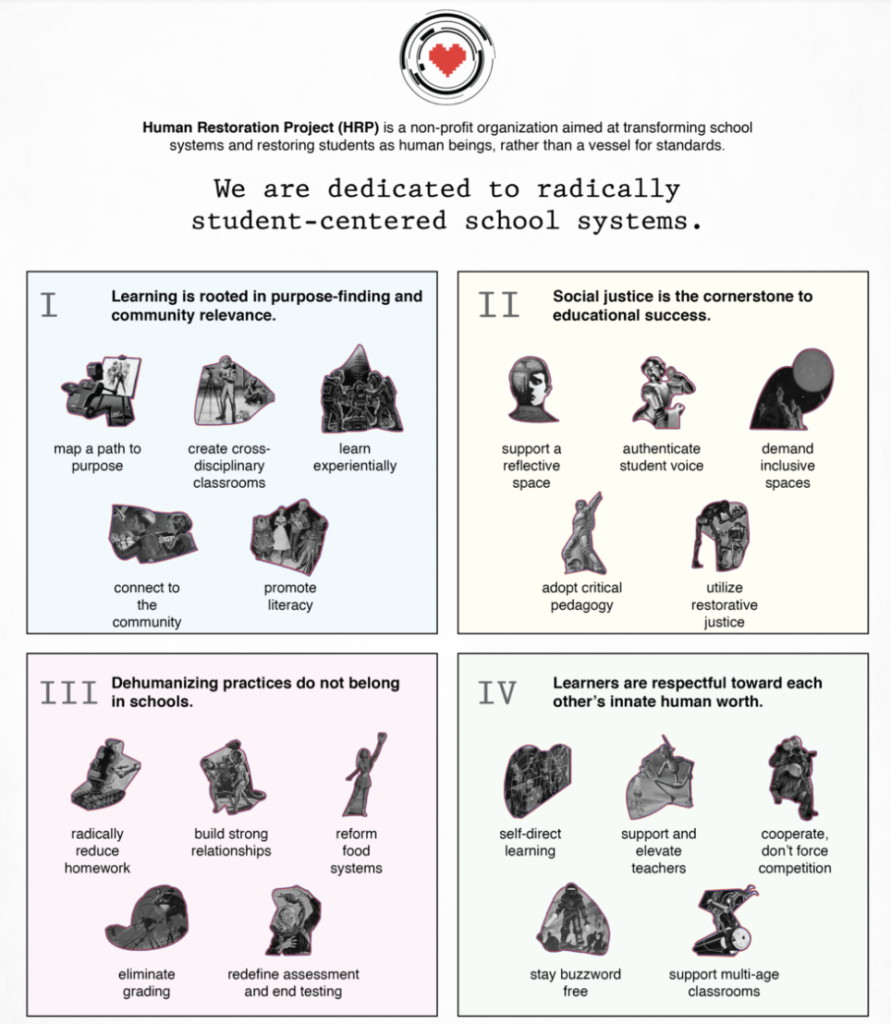
At the Human Restoration Project, we’ve written at length on the need to switch systems in education. And the good news is that we have the power to make these changes. No matter the location, there are ways to push back against the status quo, as long as we keep two concepts in mind:
- Creative Noncompliance: Teachers can say one thing and do another. Armed with research, our values, and our students’ voices, we can make changes in our classroom while ignoring dehumanizing mandates.
- Mitigated Risk: Depending on one’s context, we can make varying degrees of change. Someone’s social capital in determining their noncompliance will be entirely different in their 1st year teaching vs their 10th, or if they have a union, or the politics/culture of the building. However, there is always some room to move…and we can often move further than we think.
We supply entirely free resources aimed at helping educators make these shifts. Check it out, and let’s restore humanity to education.
That being said, it’s incredibly important that we acknowledge that we’re teaching during a pandemic. Educators and schools, in general, do not have the support that they need. Despite this call to action, it’s perfectly fine to admit that school is not going to work as well as it should or could, and in the face of school administrators and/or district policies that limit a teacher’s ability to humanize, trying to disrupt the status quo in today’s world is demoralizing.
This is equally as hard for students. Many students will not complete projects, no matter how engaging or relevant they are…because it’s a pandemic! There’s extreme stress, amplified trauma, and worry abound. That doesn’t mean we should give up on this journey, but that we must be patient and acknowledge that not everything will go according to plan. Ultimately, we must humanize as much as we can without losing our humanity ourselves.
*****
Chris McNutt is a 9th-grade digital design and media educator at Global Impact STEM Academy, a public magnet school in Springfield, Ohio. He centers his work on the experiential, purposeful design, providing students with tools to explore their path to purpose and incorporate in their daily lives through meaningful projects.
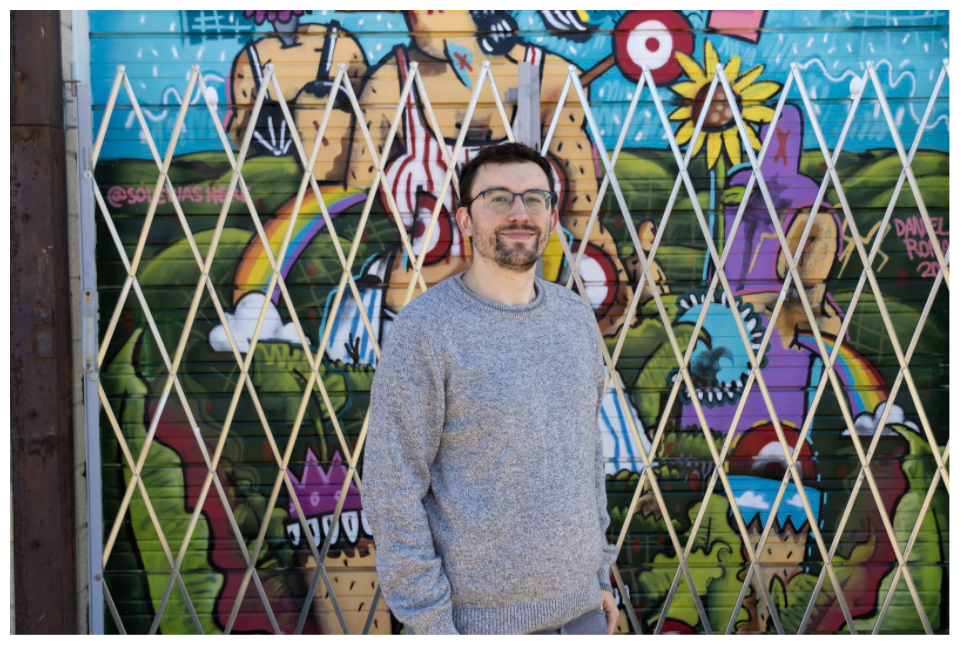
Chris is the Executive Director of Human Restoration Project, a 501(c)3 organization aimed at developing radically student-centered classrooms, and the host of its podcast – the self-titled Human Restoration Project, available on all podcast networks. All HRP resources are Creative Commons BY-NA-SA (3.0) and can be found at humanrestorationproject.org.

Chris mentioned the 11/14/20 Summit Roundtable
https://www.humanrestorationproject.org/events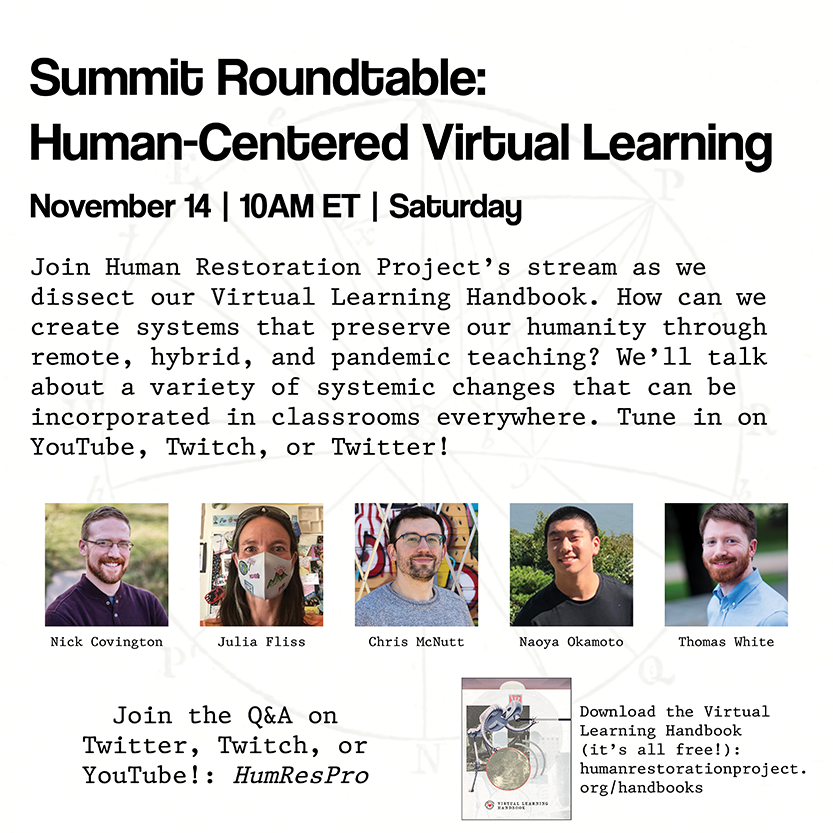
****
Interested in checking out more of the Rethinking Learning podcasts and reflections, click on the podcast tab at the top, the logo below, or go to https://barbarabray.net/podcasts/
About the author
