

Stay Connected with Grow Your WHY
Recent Posts

Archives
Episode #69: Using Technology to Close the Opportunity Gap with Ira Socol


Ira Socol is Senior Provocateur and Learning Environment Specialist at Socol Moran Partners LLC. He is a co-author of Timeless Learning: How Imagination, Observation, and Zero-Based Thinking Change Schools with Pam Moran and Chad Ratliff.
Podcast: Play in new window | Download
Subscribe: Spotify | TuneIn | RSS
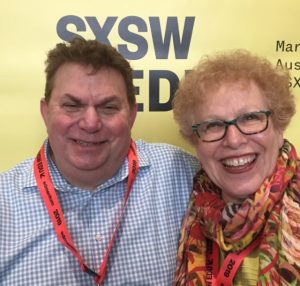
Ira presents nationally and internationally on the need to radically change the four technologies of school – time, the division of students and content, spaces, and information and communication tools – in order to give all students an opportunity to succeed. I was lucky to have a selfie with Ira at SXSW EDU. Enjoy Ira’s journey.
Your Background
I started my journey in education in some problematic ways. School was never my favorite thing. Classrooms are not my favorite places. The structure of school never really worked for me. I started out in an urban setting outside the Bronx in New York, the first city north of the Mason-Dixon line to have a Supreme Court desegregation rule. I went to a K-6 elementary school that was a huge place of 1200 students with 5-6 classes that had 30-36 students in each grade level. It was a place where teachers had a lot of independence to try a lot of things.
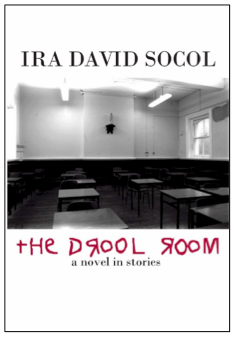 Even though I didn’t have a particularly good time in that school, I also knew a lot of people were trying to find solutions and new things. I deeply appreciated that and wrote a novel a long time ago that includes part of that in the story. The failures I experienced were not the fault of educators not trying.
The Drool Room https://www.amazon.com/Drool-Room-Ira-Socol/dp/0615165443/
What it was like for you as a student
I was lucky enough after middle school to end up in a brilliant alternative high school that was created by some local teachers in New Rochelle, NY. Neil Postman who had had just written Teaching as a Conserving Activity built that then was called a “School without Walls”. There were really no requirements credits, we had to take the NY Regents exams at the end of a required class. Other than that, we were able to learn on our own, with another, with a group. How we got the knowledge base was entirely up to the student. What I learned is that it put a lot of pressure on you. Teachers would say if you don’t want to do it that way, then do it another way. That forces you into a lot of adult thinking and makes you really process things.
This school graduated 99% of its students and sent 95% to four-year colleges. This was way above the other high schools even though it was made up of kids who were failing or because the school was not working for them. Many of the graduates have led pretty successful lives. The school existed for about 18 years until the conservative crackdown
How being a New York City Police Officer led to Technology
I studied studio art at Michigan State University and then came back to Brooklyn, NY in the mid-1980s to study architecture. The area in Brooklyn at the time was going through the most difficult time that was incredibly violent and a dangerous place. It was the neighborhood in Spike Lee’s “Do the Right Thing.”
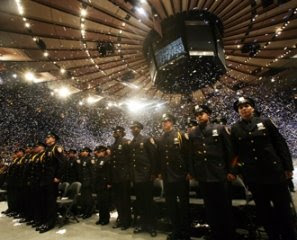
http://speedchange.blogspot.com/2009/06/great-schools-3-profession-without.html
One of the things I did to help pay tuition was security tours around the neighborhood for incoming freshmen. In doing that, I met a number of officers from the 88th precinct. From talking to them, I found a way to contribute every day to society as a man in his twenties wanting to have an ability to make an impact. Being a NY police officer was an immediate impact job. It was a time when people were happy to see a policeman. They convinced me to take the civil service test. They were extremely accommodating to my reading difficulties. The police academy education was a remarkable education and I worked in some really crazy environments.
I got hurt a number of times. When I was hurt the last time, they handed me an early IBM PC and said to see if they could use this for anything. That was my introduction to computers. I figured that coding was something I could do and also how to assemble and share knowledge. I never fully understood algebra until I really needed to find X (the criminal we were looking for). Then I had to assemble an equation to what we knew to what we didn’t know. Somehow algebra in the Sherlock Holmes way made sense to me.
Share your journey with Assistive Technology
I was always looking for something next to do that gave me that sense of what happens when you intervene at a key moment in someone’s life and change that moment. That search eventually led me to schools. I moved to western Michigan and worked in another of things to pay the bills. Then I went to Grand Valley University through the technology and educational psychology departments led me to assistive special education technology. Instead of working in the classroom, I worked in special needs technology in a high school. I was looking for technology that could read to me and that I could dictate to. The technology I found was used for blind people and not appropriate for people with dyslexia. My boss gave me a year to research to come up with a plan to make the campus accessible from a computing point of view. All the assistive technology was hidden in the disabled student office, basement, or library. One of the things I’m very proud of is that we put accessible computers everywhere there were students. People shouldn’t need a diagnosis to use the tools they need.
Toolbelt Theory
As technology began to change while I was working in schools and a vocational rehab agency, I realized that I was starting to use multiple technologies throughout my day. I wasn’t using the same things to read to me in my car as I was in my home or classroom. The writing was different at work then by myself. The driving question is “what is your skill at the moment?”
Humans are tool users. When students use tools, they choose it based on what they have to do. You don’t use the same saw to create a table that you would use to cut down a Christmas tree. The environment you’re in matters. If you’re out in the woods, you’re doing one thing. In a machine shop, you’re doing other things. Feelings even matter. Disability and ability are not stable states. You need to know the tools that are available.
One of the things we started pumping into the schools I worked with was lots of different choices of things on the computers of the time. Back then we had a variety of text-to-speech readers, browsers. The theory became the most important thing we can leave our kids with is to know how to use their technology to solve their own problems.
In 1999, I said “no technology we are teaching your kids will last more than 5 years. So we better teach them how to learn it and research it.”
The Toolbelt Theory is that you assemble your toolbelt and that toolbelt changes as you change. The theory works today. In Albemarle County School District, we always said that with computers there are always three ways to do something. Three browsers, three different word processors, three different text-to-speech systems, and more. We tried to create different tools so students could choose.
These are personal learning devices. If a student cannot control or personalize the device, then that is not personalized learning. This was a hard sell at first to some teachers, administrators, and even tech staff. Kids were learning and understood the consequences because they could lose everything on their computer.
****
This is Barbara. I had the most wonderful conversation with Ira and pulled out some interesting conversations. There is more in the podcast. Ira shared resources with me that I want to share with you of his work at Albemarle County Public Schools with Pam Moran and Chad Ratliff especially their book, Timeless Learning.
****
Multiage Learning Spaces
Here is a presentation on how kids can use technology to close the opportunity gap. https://docs.google.com/presentation/d/1SNY2EtiTK1eJ-UrmfoTpEijM9wYWQqhXZst0MiOu5IU/edit?usp=sharing
Wondering what it looks like, here’s a short video and this is what Ira described the scene: We’d like to share one of the spaces we created and get you to observe and think about this space — we can’t do justice to what it means for young people to learn in a multiage setting but we want to challenge you to consider how learning is different when kids are not stamped and graded by age
Your Book, Timeless Learning: How Imagination, Observation and Zero-Based Thinking Change Schools with Dr. Pam Moran and Chad Ratliff
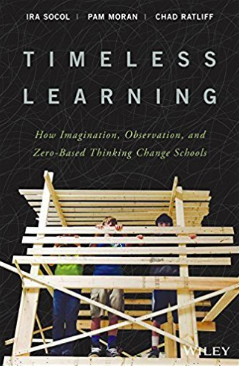
https://www.amazon.com/Timeless-Learning-Imagination-Observation-Zero-Based/dp/1119461693
Best to have Ira share his book in this interview with DisruptED TV.
****
 Ira David Socol is the Senior Provocateur at Educology Partners as he works to complete is a doctorate in education at Michigan State University. He works extensively with Michigan’s Integrated Technology Initiative (where he developed the “Freedom Stick” universal design applications suite with the help of RSC-Scotland-North+East), with Michigan’s Vocational Rehabilitation Agency, with the Albemarle County (Virginia) Public Schools, and with many other schools, districts, and divisions. He presents nationally and internationally on the need to radically change the four technologies of school – time, the division of students and content, spaces, and information and communication tools – in order to give all students an opportunity to succeed. He is the author of the “somewhat educationally-based” novel, The Drool Room, and blogs at speedchange.blogspot.com
Ira’s Contact Information:
- Website: https://sites.google.com/site/iradavidsocol/
- Blog: speedchange.blogspot.com
- Twitter: @irasocol
About the author
