

Stay Connected with Grow Your WHY
Recent Posts
Archives
10 Tips for Active Listening



“What, Huh? What did you say?”
“Are you really listening?”
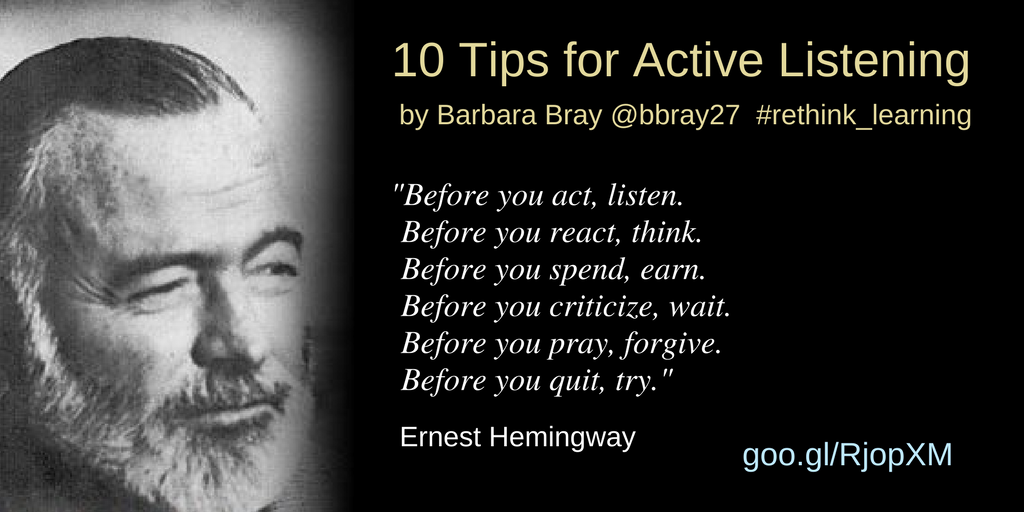
The problem with “kind of” listening is that it can lead to mistakes, misunderstandings, the wrong goals, wasting time and lack of teamwork. I love the quote in the graphic above from Ernest Hemingway. There are so many reasons for us to pause before we act. This pertains to listening as well. As a coach, I learned the importance of careful and thoughtful listening. Yet, I still have to remind myself about active listening. Some people think they are listening but to build positive relationships that work, they need to listen well.
“Listening is as powerful a means of communication and influence as to talk well.” – John Marshall
They may be listening just enough to jump in to say what they want to say. Some have trouble concentrating on what the other person is saying so they zone out or daydream while the person is talking. There are others who think they are listening but actually are thinking of all the things they want to say or need to do that day. Listening is less important than how you listen. By listening in a way that demonstrates understanding and respect, you build a true foundation for a good relationship no matter if it is between coach and coachee, teacher and students, friends, mother and child, spouses, or team members.
“I like to listen. I have learned a great deal from listening carefully. Most people never listen.” – Ernest Hemingway
Ten tips to listening well:
- Decide you want to listen: Remember the old adage about having two ears and one mouth. Maybe we’re supposed to listen twice as much as we speak. Whatever, it starts with the decision to listen.
- Come with an open mind: It is very easy to come to a conversation with a preconceived idea about the other person and what they are going to say. Give them a chance to surprise you and you surprise them with an open mind and listening well.
- Hear what they say: Make sure you can really hear the other person. It is surprising how often people do not realize that they cannot even hear other people. Make that you can really hear them first for effective listening. Let them know if you cannot hear what they are saying.
- Give 100%: Show you care about the other person or persons by giving 100% of your attention to them and suspending all other activities. If you multitask while listening, you are not listening.
- Listen 75%, speak 25% of the time: This is a powerful tip unless you are giving a speech. Try to allow the other person to speak more than you and listen to them.
- Show interest: While the other person is speaking, lean forward and maintain eye contact. Be sensitive to their cultural background while listening. Some cultures find smiling offensive. Some people talk with their hands. When you are listening, use similar cultural gestures and actions.
- Let the speaker finish the point they were making: Our brains speed along four times faster than when we speak. Try not to finish their sentences or interrupt. Wait for Pauses. When the speaker pauses, you might be able to jump in and ask a clarifying question. If there are not good long pauses, then wait until the speaker has completed speaking their idea.
- Show understanding: Just saying “I understand” is not enough. People need some sort of evidence of understanding. You can demonstrate that you understand by occasionally restating the idea they were sharing or ask them a question that probes deeper into the main idea. Try not to repeat what they said just to prove you were listening. Active listening means you can show you understand what the other person is saying.
- Respond with interest: You can demonstrate you received the message and how it had an impact on you. When you respond, speak at the same energy level as the other person. This will help the person who is speaking that they really got through to you and will not have to repeat what they said.
- Be respectful: Let them know you take their views and ideas seriously. Be willing to communicate with others at their level of understanding and attitude by adjusting your tone of voice, the rate of speech and choice of words to show that you are empathetic and trying to imagine being where they are at the moment.
“I think one lesson I have learned is that there is no substitute for paying attention.” – Diane Sawyer
Resources:
How to improve your listening skills
Talking is Sharing, but Listening is Caring
Listening is crucial in a Multicultural Workplace
Training in the Art of Listening
“Teaching is telling. Learning is listening.” Chris Watkins
This is a repost and update of an earlier post I did in 2010 on active listening. You are welcome to add any tips or ideas on active listening below.
*****
Interested in checking out more of the Rethinking Learning podcasts and reflections, click on the podcast tab at the top, the logo below, or go to https://barbarabray.net/podcasts/
About the author
