

Stay Connected with Grow Your WHY
Recent Posts
Archives
The Third Educator: The Learning Environment


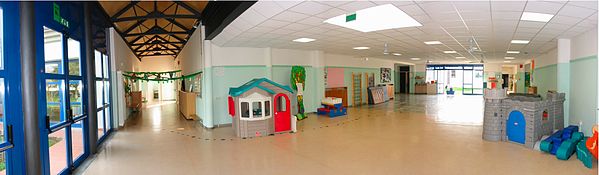
The Reggio Emilia approach is about having children seen as competent, resourceful, curious, imaginative, inventive and to possess a desire to interact and communicate with others. The environment invites learners to explore and discover on their own as teachers and parents observe and document the process.
 The ’Reggio Emilia’ approach was founded by Loris Malaguzzi (1920-1994), at a city in northern Italy called Reggio Emilia. The ’Reggio’ approach was developed for municipal child-care and education programs serving children below six. Now it is expanding to all grades because of how the learning environment impacts learning.
Reggio approach is not a formal model with defined methods (such as Waldorf and Montessori), teacher certification standards and accreditation processes. But rather, the educators in Reggio Emilia speak of their evolving “experience” and see themselves as a provocation and reference point, a way of engaging in dialogue starting from a strong and rich vision of the child. In all of these settings, documentation was explored as a means of promoting parent and teacher understanding of children’s learning and development.
The ’Reggio’ vision of the child as a competent learner has produced a strong child-directed curriculum model. The curriculum has purposive progression but not scope and sequence. Teachers follow the children’s interests and do not provide focused instruction in reading and writing. The main concepts include:
- The child as an active participant in learning.
Learners are allowed to follow their own interests. - The significance of environment. The environment of the school is seen as the third educator, after the teacher and the parent.
- The teacher, parent, and child as collaborators in the process of learning.
The Reggio approach views the parent as an essential resource for their child’s learning. - Making learning visible. Teachers use a variety of documentation methods, such as cameras, digital recorders, and journals, to track children’s thoughts and ideas as they play together or work with materials.
The Reggio Emilia approach is now expanding across the world in all grades, K-12 especially the Reggio influence on the design of the learning environment. I wanted to share The Reggio Emilia approach because it has a strong belief that children learn through interaction with others, including parents, staff, and peers in a friendly learning environment. I have been lucky to observe and experience several different models of Reggio classrooms. In all of the classrooms, I observed every child being self-directed and independent. In younger classrooms, parents and teachers followed the learning and guided the learning process.
If you want to learn more about the Reggio Emilia approach, here are some resources:
- Reggio Children home page
- Reggio Children Loris Malaguzzi Foundation Homepage
- North American Reggio Emilia Alliance Homepage
- Further reading about Reggio Emilia in the Vancouver, BC area
- L’Atelier School Reggio Emilia Resource List
Books
- The Hundred Languages of Children: The Reggio Emilia Approach – Advanced Reflections
- Bringing Reggio Emilia Home
- Bringing Learning to Life: A Reggio Approach to Early Childhood Education (Early Childhood Education, 86)
- Working in the Reggio Way: A Beginner’s Guide for American Teachers
Header image: https://it.wikipedia.org/wiki/Reggio_Emilia_Approach
*****
Interested in checking out more of the Rethinking Learning podcasts and reflections, click on the podcast tab at the top, the logo below, or go to https://barbarabray.net/podcasts/
About the author
