Stay Connected with Grow Your WHY

Please enter a valid email address.
Something went wrong. Please check your entries and try again.

Recent Posts

IMG_5640.png

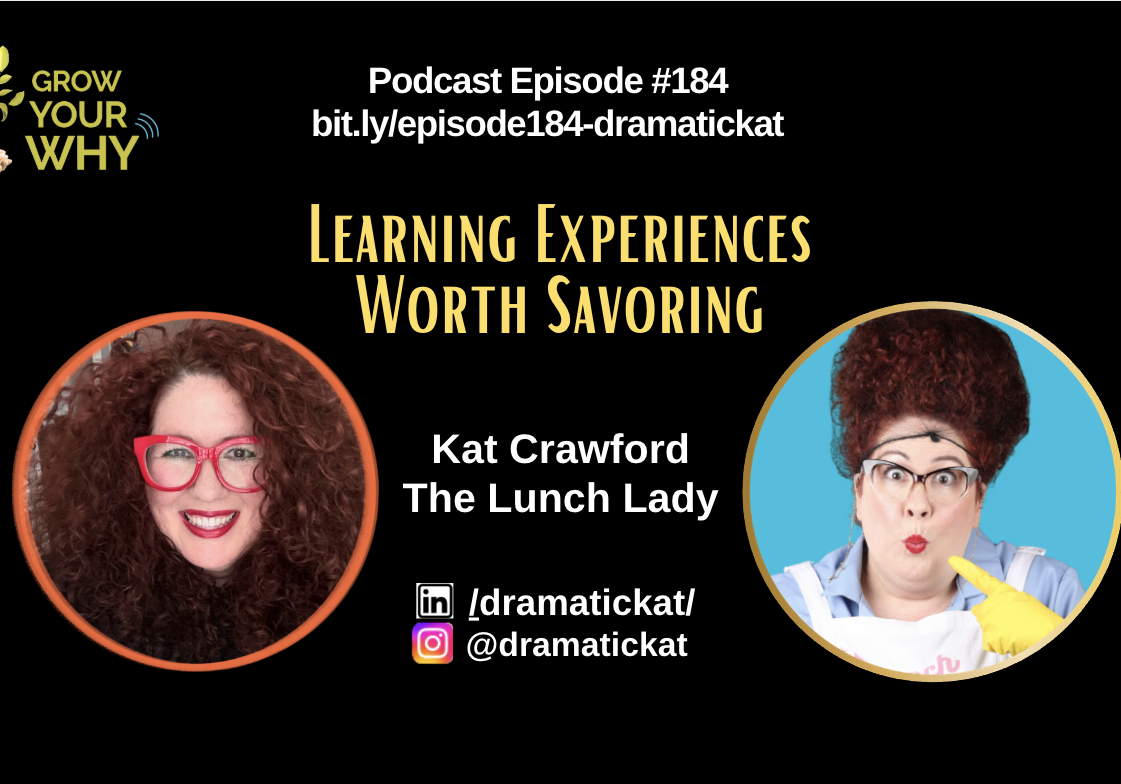
Learning Experiences Worth Savoring with Kat Crawford (EP184)

IMG_5610

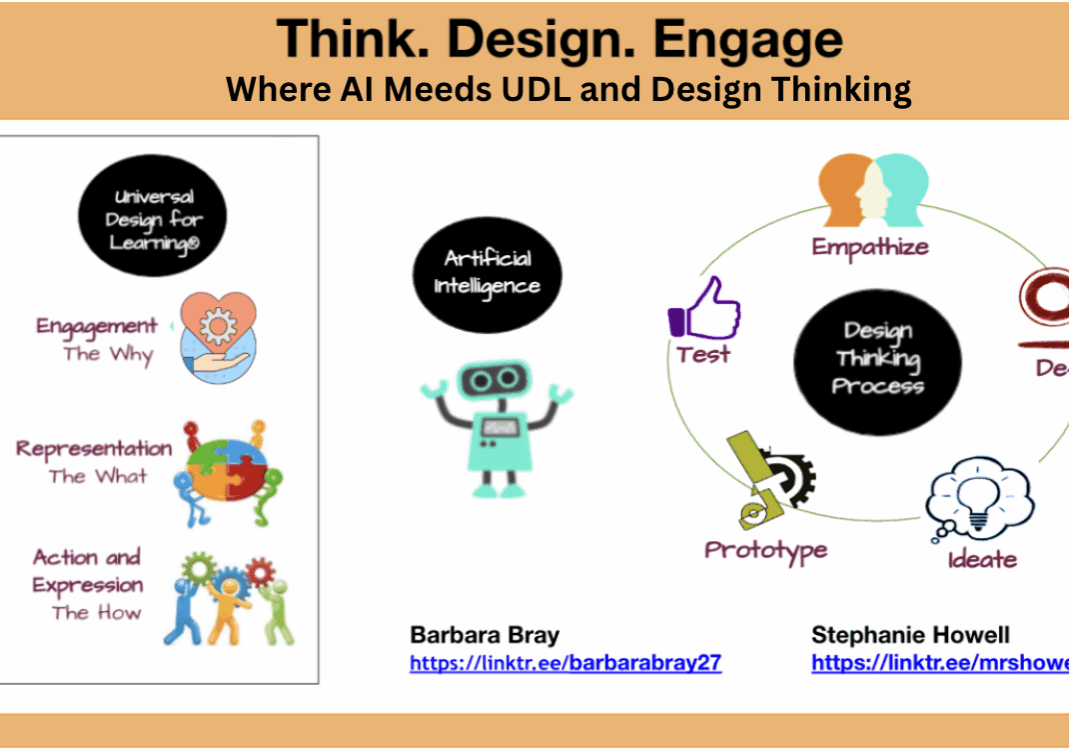
Think. Design. Engage: Where AI Meets UDL and the Design Thinking Process

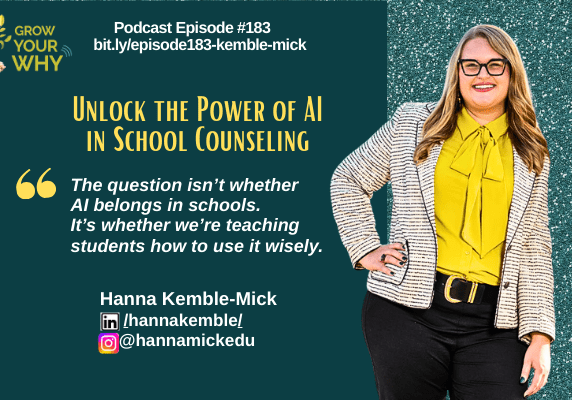
Promotional graphic for AI in school counseling podcast with Hanna Kemble-Mick.

Unlock the Power of AI in School Counseling with Hanna Kemble-Mick (EP183)

Podcast episode promoting child-centered education for future-ready schools and families.

Building Future-Ready Schools and Families with Dr. Martha Umana (EP182)

Opportunities for choice in education

Dismantling Math Anxiety with Dr. Aditya Nagrath (EP181)

Archives

Blended Learning for Each Learner

Blended learning refers to any time a student learns, at least in part, at a brick-and-mortar facility and through online delivery with student control over time, place, path, or pace. [source: infographic] This sounds like personalizing learning to me. Yet, something’s happening how schools are using the blended learning approach.

Abstract figure with graduation cap symbolizing education and achievement.

Blended learning environments are growing especially in the charter school movement. According to Michael Horn and Heather Staker on Innosight:

Online learning is sweeping across America. In the year 2000, roughly 45,000 K–12 students took an online course. In 2009, more than 3 million K–12 students did. What was originally a distance- learning phenomenon no longer is. Most of the growth is occurring in blended-learning environments, in which students learn online in an adult-supervised environment at least part of the time. As this happens, online learning has the potential to transform America’s education system by serving as the backbone of a system that offers more personalized learning approaches for all students.

They continue with a concern about the numbers of students who will have access to o online learning opportunities. There is a limit, however, to the number of students in America who have the ability to be home-schooled or attend a full-time virtual school. The same analysis that shows that 50 percent of all high school courses will be delivered online by 2019 reveals that home schooling and full-time virtual schooling will not substitute for mainstream schooling, as their rapid growth flattens out at around 10 percent of the K–12 schooling population.

There is a limit, however, to the number of students in America who have the ability to be home-schooled or attend a full-time virtual school. The same analysis that shows that 50 percent of all high school courses will be delivered online by 2019 reveals that home schooling and full-time virtual schooling will not substitute for mainstream schooling, as their rapid growth flattens out at around 10 percent of the K–12 schooling population.

Blended learning means something different to different groups depending on the ages of students, access to resources, teacher support and training, integrating digital literacy, assessment strategies, and amount of collaborative planning time.

Allison Littlejohn, director of the Caledonian Academy, Glasgow Caledonian University wrote 20 Tips and Resources for using Technology in Higher Education where she shared about blended learning:

Blended learning should transform learning, not just replicate teaching: Companies want graduates who can source, filter and use existing knowledge to create new knowledge, and the university is key to equipping students with these skills. Yet we seldom see technology  tools being used in radically new ways in Higher Ed. They are usually used to replicate lectures – think of websites or podcasts – rather than enabling students to learn in new ways.

Littlejohn makes a point that the relationship between blended learning and digital literacy is important, yet often overlooked. There are few well-defined ideas on how learners make connections across distributed networks and how they chart their learning pathways.Most of the blended learning models that I’m finding in my research so far talk about learning pathways and students’ personalizing their learning, but, in most of the models, the schools “personalize†students’ learning and adapt their students’ learning paths based on test scores and the level they reach on some online activities. Teachers may differentiate activities that they post on their website or “flip the classroom.†I like the idea of flipping the classroom so the real work in the classroom is meaningful and relevant. However, these activities are so much work for teachers. Teachers are working after-school taking up much of their own time to develop materials, lesson plans, and websites. Teachers spend time compiling data to determine how to teach to the different groups of students in their classroom. They assume that if they differentiate instruction, then each student in their classroom will understand the content.
Teachers should not be the hardest working people in the classroom.
When you look at the blended learning model for Higher Ed [Blended Learning Toolkit], teaching is teacher-directed either on-site and online and self-directed. With the availability of iTunes University, Open Education Resources [How to create your own textbook] and digital textbooks or Flexbooks [CK12/flexbooks], teachers from K-20 are picking and choosing resources to customize instruction. In all these cases, are we as teachers understanding how our students learn best? Are we taking into account each learner is not only different but they may learn in a different way? That’s a lot to think about.


There are organizations like Rocketship Education that are using adaptive courseware for students to increase their achievement in specific content areas like math and reading. These tend to be in lab situations monitored by a para-professional or teacher. The concern I have for this model is that student learning pathways are based on algorythms calculated from the answers students choose. The student has not designed their learning path or determined how they learn best using the different games or online activities. Student test scores do go up, but are students learning critical thinking skills? Some students don’t learn well this way — some do well for a time and then plateau. In this case, the software doesn’t take in account how the learner learns best. They may move to a different level or receive intervention strategies to understand the content, but do they really “get†it? How can a computer understand how each learner learns best?
How about changing the word “Student†to “Learner?†Student implies that they can only learn from a teacher. Learner implies a different role for teacher and learner. The learning starts with the learner. The learner drives and owns their learning. How about re-evaluating how the learner learns and using that information to design their personal learning path or personal journey?


Maybe what we call blended is more than on-site and online. It means knowing how the learner learns best and then blending the following to help them reach their fullest potential:
  • on-site
  • online
  • interactive games
  • small groups
  • one-on-one
  • appropriate resources
  • technology
  • observations
  • collaboration
  • personal journeys
  • flipping the classroom
  • inquiry and critical thinking
  • project-based
  • problem-based
  • design-based
  • challenge-based
  • studio-based
  • and so much more…
What if…
  • learners are able to determine how they learn best?
  • teachers are co-designers of blended learning environments with learners?
  • learners have a voice and choice in the way they learn?
  • there are a variety of opportunities of blended learning approaches to choose from?


We will see and research more models and examples of personalizing learning. Just think we are in the middle of discovering and transforming learning.  We will have to figure out how to personalize learning for all learners of all ages. The time is now. This is very exciting to be part of this type of transformation of learning. There will be lots of tugging and pulling and pushing to get it the right way. But I don’t think there will be one right way. I’m thinking each learner’s learning path will be their way.

“Grow Your Why…One Story at a Time” includes 23 stories from inspirational educators, innovators, and entrepreneurs. Go to this page or click on the book to go to Why Press Publishing for launching, details, and resources.

I’m getting wonderful feedback on how much the information and stories in “Define Your Why” have helped them. For more information about this book, go to this page or click on the book for resources, questions, and links.

Make sure you check out more of the Grow Your WHY podcasts and each post that the guests created. Click on this link or the logo below to list by episode, alphabetical, or reflections.

I am a co-host of a new podcast, “Real Talk with Barbara and Nicole.” Check out the episodes about Authenticity in a Polarized Society around different topics. Click on RealTalkBN or the logo below.

About the author

Barbara Bray is a Story Weaver capturing stories from inspirational people about insightful journeys to discover and grow their purpose. As a Creative Learning Strategist, Speaker, Coach, Mentor, and Change Maker, she has worked tirelessly for over 30 years to transform teaching so learning is personal, authentic, and meaningful. Barbara is the owner/founder of Computer Strategies, LLC with its division Rethinking Learning and My eCoach that has a new home at K12Leaders. She was the past co-founder of Personalize Learning, LLC, and co-authored two books: Make Learning Personal and How to Personalize Learning. In 2017, Barbara started the Rethinking Learning Podcast and the #rethink_learning Twitter chat. From the stories her guests shared and her own journey, she wrote "Define Your WHY: Own your story so you live and learn on purpose." She co-hosts the podcast, "Real Talk with Barbara and Nicole" with Nicole Biscotti about authenticity in a polarized society. Barbara is the author of "Grow Your Why... One Story at a Time" with inspirational stories from 23 amazing contributing authors that she self-published under a new division and publishing company, Why Press Publishing.