Podcast: Play in new window | Download
Subscribe: Spotify | TuneIn | RSS





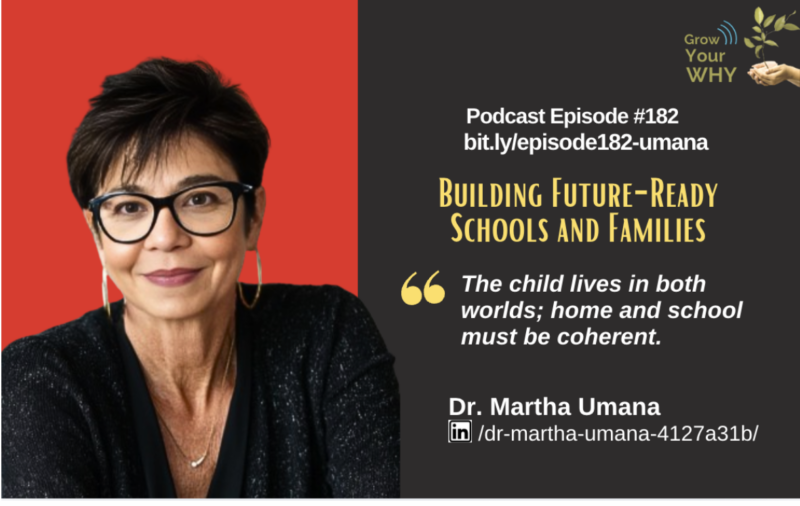
Dr. Martha Umana, Founder of AIA (AI4Educator), author, and bilingual educator, is known as The Bridge. She helps parents and teachers thrive in the AI era by prioritizing human skills for future-ready kids.
For over two decades, Dr. Umama has worked at the intersection of school and home, guiding families and educators in raising children who are emotionally intelligent, cognitively strong, and future-ready.
Your Why
My WHY is the child and the adults around the child. I kept seeing students who could produce impressive work, but they could not explain it, verify it, or revise it. When the process is missing, the child is not protected: teachers cannot assess fairly, and parents cannot mentor confidently at home. I do this work to keep learning honest across school and family life, and to build the human skills that remain stable. no matter what AI becomes: judgment, self-regulation, empathy, and truth seeking.
Your Background
I was born and raised in Latin America. Because I have lived and worked across countries and languages, I am careful about what transfers and what does not. What I focus on is universal: children learn when adults stay connected, expectations are clear, and revision is safe.
Growing up, learning was a deeply social experience. Adults helped you improve without shaming you. That balance, accountability, and connection became central to how I work with teachers and families. I do not romanticize any system. I simply pay attention to what protects children: high expectations paired with dignity, and correction paired with care.
Early in my career, I held leadership roles in higher education, including Academic Affairs Director and University Professor. Later, I moved to the United States as an adult, built a business, and eventually returned to education in public schools. Looking back, that shift mattered because it gave me the three lenses I needed: system, workplace, and relationship.
AI Changed the Conditions of Learning, and Why This is Urgent
AI did not just add a tool. It changed the conditions of learning for children and for the adults guiding them. AI accelerates output, but it does not build the internal capacities a child needs to live well. It can generate language, answers, and even persuasive arguments, but it cannot build a child’s self-regulation, empathy, moral judgment, or ability to verify what is true.
Those skills are formed through guided practice and accountability. If we do not prioritize them now, we will confuse productivity with competence. We will raise students who can perform, but cannot explain, check, or revise under pressure. That is why I say that human skills are the stable line of support when the future is hard to predict.
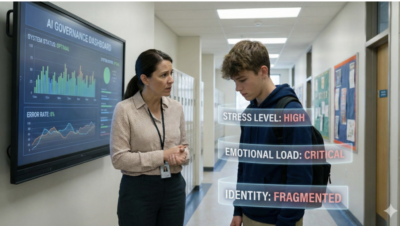
From school safety to AI governance: why emotional and identity harms appear first.
The Role Shift for Teachers and Parents
Teachers are no longer competing as holders of information. Information is everywhere. What is scarce now is judgment, verification, and authorship. So the teacher’s role shifts. Teachers become accountable architects of thinking: they design what students must know and show independently, what can be supported, and what must be verified, so learning is not replaced by polished output.
Parents face a role shift, too. Parents have a new factor shaping childhood: algorithmic influence. It shapes what children see, what they repeat, what they normalize, what they desire, and sometimes what they fear. Parenting shifts from policing screens to mentoring attention, values, safety, and truth seeking.
The child is the only person who lives in both worlds every day. That is why home and school must be coherent: shared expectations for explanation, verification, and revision keep the child protected.
Coherence before capacity: Protecting teacher thinking in the age of AI

Coherence Before Capacity, and What I Built
My organizing principle is Coherence Before Capacity. It means we align roles, boundaries, and evidence of learning first, before we scale tools, training, or adoption. Capacity without coherence just scales confusion. Coherence is what protects meaning, protects dignity, and protects the child as an author of their own learning.
I founded AI4Educator to help teachers use AI in a way that protects teacher authority, student authorship, and feasibility. That is why I built two practical supports.
Question: When AI saturates STEM ecosystems, what protects the learning process?
For teachers, I developed an Epistemic Principle: a simple way to decide what must be independent, what may be supported but verified, and what artifacts make thinking visible. I built the agent to operationalize that in teacher planning, so those protections show up in lessons without adding workload.
For parents, I created The Bridge: a shared language that brings home and school together in the same direction through explanation, verification, and revision.
The Bridge Script, One Routine That Works at Home and School
 During one of my parent education classes, a mom came in upset. Her fourth grader’s writing had been flagged as AI because it sounded too perfect. But when we slowed down, the real issue was epistemic. When the student was asked to explain the writing in their own words, the thinking was not visible.
The child was caught between two worlds. At school, the teacher needed evidence of learning. At home, the family needed homework done, and fast answers were everywhere. So I gave the mom one shared script that works at home and school.
- Show Me: Show me your process: plan, notes, draft, and what you changed.
- Explain It: Tell me in your own words what you meant and why you chose it.
- Check It: Verify one key claim or one step with a second source or method.
- Change It: Update your work based on what the check revealed. Correct an error if needed. If you are right, strengthen your evidence and explanation so that your thinking is visible.
This simple routine helps both teachers and parents protect learning integrity without turning adults into AI police.
The Bridge is available on LinkedIn: https://www.linkedin.com/newsletters/the-bridge-home-school-7378959523816009728/

Harnessing the Wind of Change:
From Digital Police to Digital Mentors
Book: How to Stay Calm While Raising Resilient Kids
By Dr. Martha Umana and Ioannis Anapliotis
Overwhelmed by endless parenting advice? Craving real‑world tools you can trust and use today?
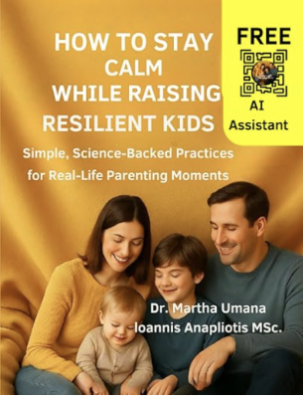 How to Stay Calm While Raising Resilient Kids delivers precisely what the latest consumer research shows parents need:
Actionable, Science‑Backed Practices, no fluff or jargon, just bite‑sized scripts and routines grounded in developmental research.
Emotional Support & Reassurance, a warm, empathetic voice that reminds you you’re not alone in the chaos.
Modern, Holistic Solutions, from mindful screen‑time strategies to gentle discipline, work‑life harmony, and nutritional guidance.
Available at https://www.amazon.com/Stay-Calm-While-Raising-Resilient/dp/B0FG2LRKQN/
Books: ME Time (11 books)
The Me Time Series By Dr. Martha Umana and Ioannis Anapliotis
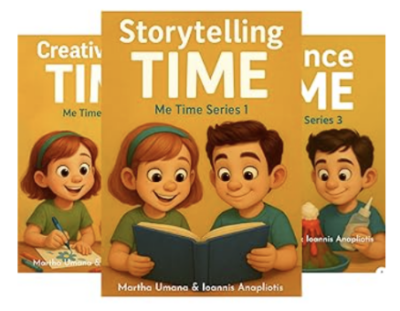 Born from the heart of How to Stay Calm While Raising Resilient Kids, this 10-book series invites children and families into calm, connection, and creativity, one meaningful activity at a time.
Each book offers simple, open-ended prompts that spark imagination and emotional growth through hands-on experiences. These are not just activity books. They’re invitations—to slow down, to tune in, and to share time that feels nourishing for both child and adult. Created for real families with real lives, the Me Time Series helps you bring calm and creativity into your home, without pressure or overwhelm. Perfect for ages 4 to 9. No special supplies needed. Just time, presence, and a little space to explore together.
Book: Mindful Moments: A Beginner’s Guide to Practical Meditation for Daily Stress by Dr. Martha Umana
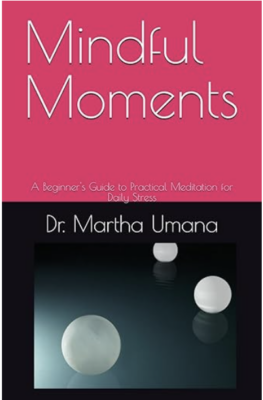 Unlock tranquility and balance with “Mindful Moments,” your essential guide to integrating meditation seamlessly into your bustling schedule.
Mindful Moments equips you with a practical toolkit that fits effortlessly into any lifestyle, ensuring that serenity is just a breath away, no matter how hectic your day may seem.
What’s next for AI in 2026 and beyond
In 2026 and beyond, I expect the conversations to grow in three visible ways.
First, systems will move from excitement about tools to clarity about boundaries: what must remain human, what can be supported, and what must be verified.
Second, the assessment will change. Schools will not be able to treat polished output as evidence of learning, so we will see more emphasis on process artifacts: drafts, reasoning, oral explanation, verification steps, and revision trails.
Third, the real differentiator will be human skills. AI will keep getting better at generating, but it will not build a child’s judgment, self-regulation, empathy, or truth-seeking. Those have to be deliberately practiced through routines at school and at home. That is why I focus on Coherence Before Capacity. If we get coherence right first, roles, evidence, and verification routines, then capacity, tools, and training can scale without damaging learning.
The next era is not tool adoption, it is learning integrity: making thinking visible, verification routine, and human skills non-negotiable.
Featured on page 39 of the Eduverse Newsletter
https://heyzine.com/flip-book/693508ed2b.html#page/1
Dr. Martha Umana’s Contact Information
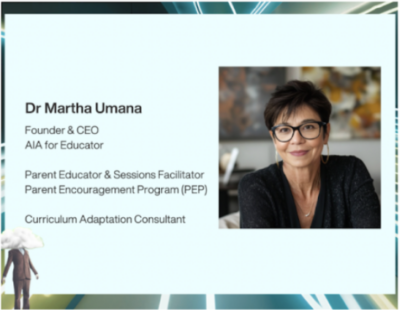
https://www.linkedin.com/in/dr-martha-umana-4127a31b/
Email: dr.marthaumana@gmail.com
******
I always learn so much from Dr. Martha Umana. Each time we talk, I find out something new about her and her background. This is why I love these conversations on my virtual porch. I appreciate all the work Martha did to create this blog post that complements the podcast. Enjoy, and please share it with your friends.
“Grow Your Why…One Story at a Time” includes 23 stories from inspirational educators, innovators, and entrepreneurs. Go to this page or click on the book to go to Why Press Publishing for launching, details, and resources.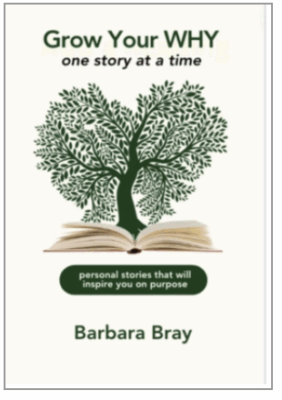 |
I’m getting wonderful feedback on how much the information and stories in “Define Your Why” have helped them. For more information about this book, go to this page or click on the book for resources, questions, and links.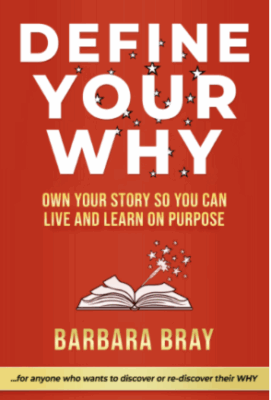 |
|